
Come in Agent Elop, your work is done
Posted: September 3, 2013 Filed under: Uncategorized | Tags: acquisitions, android, apple, CEO, devices and services, finland, M&A, microsoft, microsoft buys nokia, nokia, redmond, RIM, smartphones, stephen elop, steve ballmer, windows phone Leave a comment It’s finally happened. Microsoft today announced it is buying most of Nokia’s mobile phone business for a bargain €5.44bn (£4.62bn) in cash.
The deal will see Redmond snap up the Finnish giant’s Devices and Services business for €3.79bn (£3.2bn), license Nokia’s patents for €1.65bn (£1.4bn).
It’s a dramatic last roll of the dice for outgoing CEO Steve Ballmer and neatly brings back former Redmondite Stephen Elop into the fold.
He’ll be stepping aside as Nokia boss to become EVP of Devices and Services, but must be one of the favourites now to succeed Ballmer. If so, this will be one of the most expensive pieces of headhunting in corporate history.
Nokia’s chairman of the board Risto Siilasmaa will take the reins as interim CEO while the deal goes through the usual shareholder and regulatory approvals. Microsoft said it expects the transaction to close in Q1 2014, all being well.
For Microsoft the deal is proof if any were needed that it’s no longer a software company, that it sees success in the smartphone space as crucial to its future and that it can’t rely on a partner like Nokia to deal with the hardware side of things.
A few things occur to me:
- HTC and RIM will be pretty disappointed – who are they going to get to buy up their failing businesses now?
- Agent Elop has now been recalled after 2 years out in the field persuading Nokia’s board to sell to Microsoft. Job done – you may now progress to Microsoft CEO.
- China’s up and coming smartphone poster child Xiaomi was recently valued at $10bn, nearly $2bn more than Nokia at this sale. Surely over-inflated.
- This deal, while it could theoretically ensure phones get out faster to market, is not going to make life any easier for Microsoft or its new Nokia Devices and Services division. Especially in Asia. Its lack of apps will still hold it back.
- Is Nokia still Europe’s largest technology firm? Over 30,000 staff will now be Microsofties but it still has over 50,000 employees on its books working on the reasonably profitable NSN biz and location services. It should be in pretty good shape.
IDC analyst Bryan Ma told me that the deal would give Microsoft a shortcut or “jump start” into the hardware space, but could end up alienating OEM partners.
“It’s got device, manufacturing, economies of scale, and channels to sell into which would have all take it longer to grow organically, as well as valuable patents,” he argued.
“My concern is as much as this can help it doesn’t solve the biggest problem facing Windows Phone and Windows 8 on tablet and PC – it doesn’t have enough apps to make a compelling platform.”
Tellingly, Microsoft only devotes one bullet point on the app ecosystem in a mammoth 27-slide presentation explaining its strategic rationale, he pointed out.
Ma added that the deal could end up alienating more OEM partners.
“The whole debate Microsoft got into when it released Surface was that its hardware partners like Acer said it was stepping on their toes. This will raise questions over whether this is more salt in the wounds for them.”
As for smartphone OEMs well Windows Phone has very few of those beyond Nokia anyway so it will step on fewer toes, he said.
However, I’d agree with Canalys VP research Rachel Lashford that it’s not exactly going to attract any more into the fold either.
“It reminds me of a decade ago when Nokia owned Symbian and tried to license it out but it didn’t work out,” she told me. I can’t think of many OEM vendors would fancy going head-to-head with Microsoft on Windows Phone now.
As for Asia-specific repercussions, well I’ll be taking a look at those – and there should be some given Nokia’s legacy in India and Microsoft’s desire to crack China – in my next post.
Apple taking one for the team in new labour rights abuse report
Posted: July 30, 2013 Filed under: Uncategorized | Tags: apple, china, china labor watch, coo, cupertino, foxconn, ipad, iphone, labour rights, new iphone, ODM, OEM, pegatron, supply chain, Taiwan, tim cook Leave a comment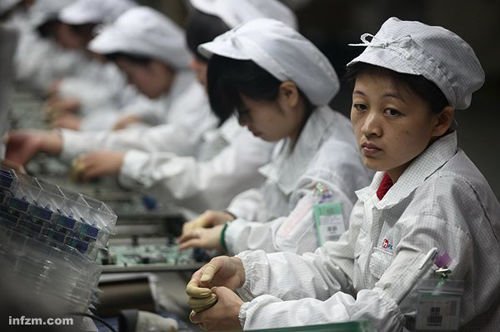 One of the biggest stories of the past week I’ve covered in the Asia technology space was the latest report from China Labor Watch into alleged rights abuses at Apple supplier Pegatron.
In terms of the abuses uncovered by the rights group, they’re pretty similar to those detailed at Foxconn over the years which led to a landmark agreement between Apple, the Fair Labor Association and the Taiwanese manufacturer to sort out conditions at its plants.
When I say “similar” I mean things like overworking and underpaying staff, breaking local employment laws through discriminatory hiring, excessive overtime and the like and subjecting employees to sub-standard living conditions.
You can usually gauge the seriousness of the allegations by the speed of the tech giant in question’s response and the length of its statement. So it was that Apple came back within a few hours with a long response claiming it had undertaken 15 audits at Pegatron and that it had been “in close contact” with CLW investigating findings highlighted by the group.
It added:
Their latest report contains claims that are new to us and we will investigate them immediately. Our audit teams will return to Pegatron, RiTeng and AVY for special inspections this week. If our audits find that workers have been underpaid or denied compensation for any time they’ve worked, we will require that Pegatron reimburse them in full.
One para that was lopped off my story referred to the fact that Pegatron facilities, including the ones mentioned in the report, produce gear for a raft of big name technology brands besides Apple. Microsoft, Dell, HP, Nokia and Asus have all had kit made by the Taiwanese headquartered manufacturer in the past.
Beyond Pegatron too there have reports of various rights abuses, in Samsung suppliers, and Chinese manufacturers making kit for firms including Telstra, Sony and Phillips.
However, the fruity-themed Cupertino giant, unfortunately for it, now has a reputation which makes it easier for hacks like me and rights groups like CLW to build a compelling narrative around such incidents.
For better or worse that’s the way it is but hopefully with Apple taking a lead, as it is certainly appears to be trying to do, on improving labour rights among its suppliers, others will follow. We mustn’t forget Apple boss Tim Cook used to be the firm’s COO and so will be well aware just how big a task it is to clean up the supply chain.
This is a process which will take years, not months, but it’s reassuring to an extent that stories like this still make the headlines, because once they stop then the whole process of improving the rights of shop workers in countries like China is likely to grind to a halt too.
Don’t worry Cisco, you’re not getting kicked out of China
Posted: July 4, 2013 Filed under: Uncategorized | Tags: android, apple, beijing, china, cisco, communist party, edward snowden, global times, microsoft, network infrastructure, nsa, operating systems, PRISM, surveillance Leave a comment A lot of media reports have been flying around this past week or two predicting that US tech firms will find life increasingly difficult for them in China following the various revelations leaked by Edward Snowden.
It’s a compelling narrative and on one level makes quite a bit of sense.
If, as the PRISM whistle-blower has claimed, the NSA really is spying on foreign targets including China and Hong Kong and even allies like the EU, then the logical next step would be to assume it could be doing so with the acquiescence of US technology providers who have managed to establish a firm foothold in the country.
After all, wasn’t it US lawmakers who branded Huawei and ZTE a national security threat due to the perceived risk of the firms being forced by Beijing to modify systems to enable state-sponsored eavesdropping?
No wonder then that Chinese state-run media including the English language Global Times have called for US companies including Cisco to be replaced by domestic providers. China Daily even sourced an anonymous “industry insider” who claimed: “There is a terrible security threat in China from US-based technology companies including Cisco, Apple and Microsoft.”
There’s good reason to believe that Cisco et al won’t be overly concerned about such claims, however.
For one thing, although its kit is all over China’s network infrastructure, the market there accounts for less than 5 per cent of turnover.
Huawei is probably Cisco’s biggest Chinese competitor, especially in the telco edge router market, and has certainly been taking market share from the venerable US giant, but a rip-and-replace policy of the sort advocated in the Chinese media is simply not practical.
“I would say a few vendor replacements had considerations beyond the offerings themselves, for example for certain clients with high security sensitivity,” Gartner analyst Tina Tian told me. “But much more of it would be purely a market decision.”
As for the other US technology providers, the likes of Google Android, Microsoft and Apple between them control just about the entire mobile and desktop operating system market in China.
For that reason and the lack of strong domestic alternatives (for the time being) we’re just not going to see wholesale changes here, which could even work in Cisco’s favour, according to Tian.
“Even if China could replace all the networking equipment from foreign vendors, their data would still need to be handled by IBM, Oracle, HP, EMC, Intel and also Microsoft,” she said.
Huawei the crouching tiger ready to bare its enterprise fangs
Posted: April 25, 2013 Filed under: Uncategorized | Tags: apple, BYOD, carrier networks, enterprise IT, huawei, Huawei Device, Huawei Enterprise, huawei global analyst summit, network infrastructure, samsung, shenzhen, smartphone Leave a comment I spent the first part of the week at Huawei’s global analyst summit just across the border in sunny Shenzhen. There wasn’t an awful lot of news per se, but a good many bold financial predictions from the fast-growing firm, which is trying to manage the unheard of triple whammy of success in carrier, enterprise IT and consumer device markets.
No firm has managed to succeed in all three, but Huawei is certainly going the right way about it. The firm stands third in the worldwide smartphone market, is breathing down Ericsson’s neck in the carrier space and has big plans to grow its enterprise business. On that front we heard the firm expects 45 per cent growth this year, and a CAGR of around the same to reach $10bn in revenue by 2017.
It’s not all hunky dory at the Shenzhen headquartered vendor though. Alternate CEO and EVP Eric Xu effectively said at the event that it had given up on the US as a potential growth market. Now that’s not to say it wouldn’t like that to change in the future, but given the intractable stance of Congress on this it’s not likely. So where’s the enterprise growth to come from?
Analysts told me developing markets like Indonesia and Myanmar represent potential but not immediate revenue growth at the moment – for that it needs to tap developed regions. China still represents the major slice of the enterprise pie for Huawei and that’s all dandy, but there are mutterings that local government spending may tighten in the near future, which would be bad news for the firm.
“In enterprise, Huwaei is strong in the networking and infrastructure segment. It also has other products around unified communications, contact centre and security, but overall market share is very small outside China,” Frost & Sullivan analyst Pranabesh Nath told me.
“Like the Japanese firms of the post-world war era, it is mostly positioned as a value oriented player, but is trying to improve its products to move up the value chain.”
A potential roadblock on this journey is a perceived lack of clarity around its product lines, according to IDC’s Ian Song. He said the Fusion datacentre brand in particular has caused some confusion amongst the analyst community, which view Huawei’s enterprise message as a “work in progress”.
That said, its technology is sound, R&D spend is massive and it’s got a great base to start with its strength in the carrier space. IBM, Cisco, HP et al won’t be breaking into a sweat just yet but they’d be foolish not to see the crouching tiger hidden in plain sight.
On the device front, we heard from CMO Shao Yang about Huawei’s plans to shift 60 million smartphones this year. This won’t exactly propel it into the top two among Samsung and Apple, but it’s a pretty clear statement of intent. In this industry, brand perception is all-important, and it’s something Huawei, which didn’t really have a brand until it launched the Ascend line last year, has historically struggled in.
That said, it’s learning fast and the high-end handsets its coming out with are pretty slick, so expect a whole lot more on the marketing front this year and an increasing number of Huawei-branded devices to manage as part of your BYOD strategy.
Chinese OEMs still not auditing for labour rights abuses
Posted: November 9, 2012 Filed under: Uncategorized | Tags: apple, china, china labor watch, factory, foxconn, HEG electronics, IHS iSuppli, iPhone 5, labour abuses, labour right, ODM, OEM, samsung, technology, Vtech Leave a comment China watchers will be well aware of the story by now. Most of the shiny tech kit we buy in the western world is produced in conditions ranging from ‘challenging’ to downright miserable. Apple provider Foxconn is often highlighted as a prime offender but the depressing truth is that it is one of the better employers. As long as labour rights abuses continue, though, they should continue to be reported.
The below is a piece I wrote up from my chat with IHS analyst Tom Dinges:
Half of China-based OEMs still don’t require third party audits of their manufacturing providers despite many high profile cases emerging this year involving serious breaches of labour laws and widespread strikes, according to market watcher IHS iSuppli.
The supply chain analyst revealed the news as part of a wider survey of the global technology industry.
Over the past year incidents at factories belonging to Apple supplier Foxconn, as well as plants run by contract manufacturer VTech and Samsung provider HEG Electronics, among others, have highlighted the poor level of compliance with local laws at many plants.
Although China has strict labour laws which prevent children under the age of 16 working, keep working hours and overtime to manageable levels and prohibit discrimination, they are poorly enforced.
Not-for-profit groups including China Labour Watch and Hong Kong-based SACOM have time and again uncovered incidents alleging such rules have been broken, with reports claiming physical violence, bullying and filthy living conditions are the norm in many factories.
Staff dissatisfaction comes to a boil periodically in the form of strikes or bouts of violence. In October it was claimed that thousands staged a walk out at Foxconn’s Zhengzhou factory where the iPhone 5 was being made, while a month earlier, scores of workers were hospitalised after a mass brawl at a managed dorm near Foxconn’s Taiyuan plant.
“There are aspects of the labour laws many firms turn a blind eye to for the sake of satisfying their customers and getting products out of the door,” IHS analyst Tom Dinges told me.
“Considering how much of the supply chain is embedded in China it’s too costly to move to another region so the issue is ‘what do we do to ensure our suppliers adhere to the local labour laws they’re supposed to?’.”
Dinges added that the ‘headline risk’ of bad publicity, especially as it filters down to middle America through regional media outlets, should be forcing change on this front.
Foxconn is one notable supplier which seems to be taking a lead on this, having agreed with Apple to on-going audits by the Fair Labor Association, although worrying cases of rights abuses continue to emerge at some of its plants.
China Labor Watch also claimed at a Congressional hearing in the summer that the audit process is flawed in many cases, with widespread bribery and collusion on the part of suppliers and auditing companies.
Dinges said that as the industry matures this situation should improve, with auditors taking their cue from financial investigators.
“These organisations will have to meet a certain expected level of authenticity, vigour and independence,” he added.
“We’re past the stage of hyper growth. Now a lot of what is produced there ends up staying in China. If that’s the case then the factory employee is also a customer and you want to be sure to treat your customers well.”
Samsung latest to be hit by supplier labour abuse scandal
Posted: August 8, 2012 Filed under: Uncategorized | Tags: apple, china, china labor watch, foxconn, HEG electronics, labour abuses, labour rights, samsung, smartphones, supply chain, Vtech 1 Comment Another week, another woeful tale of big tech brands taking advantage of weakly enforced labour laws and immoral supply chain manufacturers.
This time it was Samsung that had its supplier factories investigated, and what was revealed, as always, was not pretty.
HEG Electronics’ plant in Guangdong – which apparently makes phones, MP3 players and other electrical kit for the Korean giant – was infiltrated by spies from not-for-profit China Labor Watch, yup, the same group that warned of severe irregularities in the auditing system of the tech supply chain.
The same old problems came to light as at Foxconn and VTech, of low pay, staff bullying and physical abuse, dangerous working conditions and forced and excessive overtime.
However, HEG was also accused of employing kids as young as 14 year’s old – illegal even in China –and paying them, and the huge intake of student interns it uses to man its factory, just 70 per cent of their rightful salary.
To its credit, Samsung did respond with a little more than we got from VTech and its customers:
Samsung Electronics has conducted two separate on-site inspections on HEG’s working conditions this year but found no irregularities on those occasions.
Given the report, we will conduct another field survey at the earliest possible time to ensure our previous inspections have been based on full information and to take appropriate measures to correct any problems that may surface.
Samsung Electronics is a company held to the highest standards of working conditions and we try to maintain that at our facilities and the facilities of partner companies around the world.
The issue here again goes back to the validity of the inspections. Unless they are independent – conducted for example by not-for-profits like China Labor Watch – and unannounced then they are virtually useless.
Samsung, if you remember, was highlighted as a client of Intertek, the professional auditing company that has in the past been found guilty of accepting bribes from clients in return for passing a clean bill of health.
There’s no suggestion that happened at its HEG audits, but it’s clear that the audit card should no longer be accepted as a reasonable explanation of such irregularities.
More trouble at’ mill (or Chinese sweatshop)
Posted: August 2, 2012 Filed under: Uncategorized | Tags: apple, audit, china, china labor watch, Dell, HP, intertek, ngo, samsung, sweatshop, Vtech Leave a comment More news on the continuing plight of Chinese workers in tech manufacturing plants, and the apparent blind eye the major multinationals are paying to their condition, emerged this week.
Li Qiang, founder of NGO China Labor Watch, claimed to the Congressional-Executive Commission on China on Tuesday that the audits which most MNCs commission aren’t worth the paper they’re written on.
He pointed to widespread bribery of auditing firms by the big name companies – basically, they bung a few thousand dollars and the auditors agree not to expose any problems in the factories which might require lots of money to fix.
Although Li didn’t accuse any outright of corruption, Dell, HP, Samsung and Apple were all said to have “severely flawed” auditing systems. He also exposed auditing firm Intertek as having been caugt in the past for accepting bribes.
Said firm has Samsung and Siemens as clients and a lot more tech companies besides.
Now the CECC is most definitely sympathetic to the aims of Li and his counterparts in other NGOs, and one can’t help thinking the reason they’re so keen to expose malpractice in China isn’t to get the workers a better deal but to force such a public outcry that US firms decide to bring jobs back to their homeland.
In fact, it was certainly mentioned several times at the hearing that US workers couldn’t hope to compete against factories where staff are paid a pittance and over-worked to the point of exhauston.
Whatever the motives, though, this needs stuff exposing – factory audits are commonly used by tech companies whose plants are found wanting, as a handy cure-all to keep the media and customers happy.
If they fail, there is literally no point – but we kind of knew that anyway. The only way to change things long term is consumer pressure on companies to improve working conditions followed up by independent and random inspections from NGOs.
Needless to say none of the tech companies above have come back to me.
The lack of response is not just typical of local PR failure – I’ll bite my tongue on that one for the time being – but endemic of the lack of transparency at these big tech brands. If they’re really confident in the conditions at the factories – dismiss such accusations out of hand, invite random inspections etc
Hopefully, as consumers and politicians get more savvy to what’s going on and start to ask more searching questions, these multi-nationals will find it harder to fob them off with the old audit card.
There’s a long way to go yet.
(More entries on this subject can be found here, here and here.)
Jury’s out on Apple and Foxconn deal with FLA
Posted: March 30, 2012 Filed under: Uncategorized | Tags: apple, china, fla, foxconn, ipad, iphone, wage Leave a comment(source: infzm.com)
Have just finished a news story for The Register on what Reuters is calling a ‘landmark deal’ between Foxconn, Apple and the non-proft Fair Labor Association over pay and working conditions at Foxconn plants.
Now we can all talk ad nauseum about whether Apple is being unfairly singled out here and whether the workers even want or deserve to be treated differently than the vast majority making our clothes, shoes and shiny toys.
But here are the facts.
People committed suicide at these factories, quite a lot in fact, and I don’t buy the fact they were all depressed country bumpkins out of their depth in a new environment – there must be something seriously wrong inside those plants to lead to that.
So a couple of points to note from this. I was quite impressed the FLA produced such a damning report of conditions – many groups expected them to either go easy on App-conn or for the factory owners to have improved conditions to such a degree for their planned inspection that they got a rose tinted view.
This didn’t happen.
So as a result of the guarantees Foxconn and Apple have given, overtime and working hours will come down to within legal limits, accidents will be more accurately recorded, internships adapted, and union elections will not be interfered with by management.
All of which is great, but I’m going to remain sceptical until July 2013, when the deadline for changes comes (why so far away, by the way?!).
For one, the report doesn’t mention the management abuses of staff – either mental or physical – which some argue contributed to those suicides, and the it also glosses over the widespread abuses of the internship scheme as uncovered by SACOM.
There are other guarantees given by Foxconn which will be very hard to substantiate – whether union representatives are elected freely, accidents are recorded properly and overtime compensation doled out appropriately, to name but a few examples.
The proof for this will certainly be in the pudding, and as I’ve said before, the key to it all is consumer pressure – that drifts away and things could very easily slip back into old patterns.
Scalpers on standby at the Hong Kong Apple Store
Posted: March 15, 2012 Filed under: Uncategorized | Tags: apple, hong kong, ifc mall, ipad 3, scalper, store Leave a comment They just don’t get it do they?
Every time a shiny new Apple toy comes out in Hong Kong, so, it seems, do the mainland scalpers. I popped down there on Wednesday evening ahead of the new iPad launch on Friday to see what all the fuss was about and sure enough, there was a gaggle of rather dishevelled looking souls camped outside.
As I wrote in this story for The Register, though, they didn’t look like your typical scalpers. I’m not being sexist here but i had more to mind large, burly male types rather than young women and old men. They were also camped rather a long way from the Apple store – over a footbridge and down some steps to be precise, but that could be as it’s the closest to the IFC Mall that the police will let them stand.
A pretty pissed off police officer told me they’ve been asked to move on several times but won’t budge – some one has even stuck up signs in English and Chinese saying Apple will not allow first come first served walk-in purchases on Friday, but to no avail.
In fact, the policeman got even more exasperated as, when I was talking to him, he noticed an Apple store official demonstrating one of the new iPads to the assembled crowd. If they are scalpers, it’s a pretty strange way to treat them.
In the end it’s all down to supply and demand. It doesn’t matter that Apple has instigated a strict Reserve and Collect system which requires pre-registration and authorisation via the web site before users are given the chance to collect in store the following day.
If there are no new iPads on sale in China and no slated release date, as there isn’t at the moment, then some chancers are always going to come over the border in a bid to buy some in order to sell on at vastly inflated prices.
We’ll have to see what happens on Friday, but I’m pretty sure there’ll be some shady bargaining going on with successful iPad 3 customers as they leave the store with their shiny new toy.
What is going to happen in the Apple Proview iPad case
Posted: March 2, 2012 Filed under: Uncategorized | Tags: apple, ipad 3, legal, proview, trademark 1 Comment Another week has gone by and still the Apple Proview iPad trademark conflict has yet to be resolved. I’ve covered this one pretty extensively for The Register now so here’ my two pence worth.
So the state of play at the moment is that Guangdong High Court has adjourned to consider Apple’s appeal against an earlier judgement in Shenzhen which ruled in favour of Proview, effectively preventing Cupertino from selling iPads in China.
When it comes down to it the disagreement is pretty simple. Apple reckons that I bought the trademark for several regions including China fair and square from Proview. However, the bankrupt monitor company claims it didn’t buy the trademark for use in China as it didn’t deal with Proview Shenzhen, the affiliate which held that particular TM.
In the appeal court, which didn’t really see any new evidence or arguments presented by the way, Apple complained that Proview misled it and that it signed documents saying it has the rights. Proview said that even if it did, its Taiwanese entity is separate from its Shenzhen company and therefore did not have the right to sell.
So here’s what’s going to happen.
I’m pretty sure Apple will have to settle out of court on this one. The market in China is worth billions. In fact, Apple is already making billions of pounds in smartphone and tablet sales – where some figures put it as market leader.
The company is also hugely profitable, so even a $2bn pay out, as some are saying Proview is asking for, would be do-able, although the only worry here is that the precedent will be set for other Chinese companies will try to hold Apple to ransom down the line.
In all honesty though, it’s a drop in the ocean for the company and with the iPad 3 coming out as soon as next week according to reports, Apple would be crazy not to get this resolved – it has a already seen the Chinese are very quick at enforcing a sales ban if the judgement went against it.
The options some have mooted of changing the iPad’s name in China, in local language at least, or of building a differently designed machine for that market, are just not going to happen.
Watch this space.
 phil muncaster