
Tizen bulks out, but still no handsets
Posted: February 17, 2014 Filed under: Uncategorized | Tags: android, baidu, firefox os, huawei, iOS, linux, mobile OS, mobile world congress, ntt docomo, operating systems, sailfish, samsung, smartphones, softbank, sprint, tizen, tizen association, windows phone, zte 1 Comment A few of you may have seen that last week I wrote about improving momentum behind mobile OS project Tizen.
Well now I have a bit more detail from some of the key players involved.
For those who haven’t heard of it, Tizen is an open source alternative to Android, iOS and Windows Phone. Begun in 2011 by the Linux Foundation, it’s already got the backing of Samsung, Huawei, Intel Vodafone, Orange and NTT Docomo.
However, as of yet there are still no handsets, despite much expectation to the contrary.
Unruffled, last week the Tizen Association announced an impressive 15 new members, which bodes well for the on-going prosperity of the platform..
On second glance, though, it’s not as positive a news story as it seems.
First up there are only four major mobile names among the 15 – ZTE, Softbank Mobile, Sprint and Baidu – with the rest a group of smallish mobile game and software makers, few of which I’d heard of.
I asked the firms whether their joining the association meant we could finally expect a handset to have a look at, but sadly even this prospect is unlikely.
A spokesman for Japanese operator Softbank said that “currently nothing is decided on the future development of Tizen OS smartphones”.
He added:
SoftBank Mobile joined the Tizen Association Partner Program to study the platform technology. Unlike some of the board members (like NTT DOCOMO), we are not taking an active role in developing or promoting Tizen. We have participated in developer conferences in the past, too.
Then this came in from ZTE:
ZTE’s membership is consistent with the company’s multi-platform approach to product development. ZTE’s comprehensive line-up of mobile devices includes products that support different platforms including Android, Windows and Firefox OS.
Hardly a ringing endorsement from either party then.
So will we ever see a Tizen phone? NTT Docomo has backtracked on plans to launch this spring, apparently stating that “the market is not big enough to support three operating systems at this time”.
That said, the invites have already been sent out to hacks attending Mobile World Congress of a Tizen press conference in which the association is said to be finally showing off some actual hardware.
It better be good. Even with Samsung on board, time’s running out and the market is barely big enough for Windows Phone – not to mention the likes of Firefox OS, Sailfish and others – let alone a fourth name.
Intel Outside: the story behind Edison
Posted: February 14, 2014 Filed under: Uncategorized | Tags: behind intel edison, CES, china innovation, edison, intel, intel inside, intel labs china, R&D, randolph wang, raspberry pi, SD card, start up Leave a comment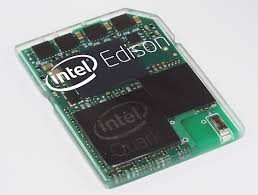 I’ve just written up for The Reg a news story based on one of the most interesting interviews I’ve done since moving here to Hong Kong: Intel Labs China’s chief scientist, Randolph Wang.
There wasn’t enough time to put everything in that piece so here’s the unabridged version (unfortunately without pics as most of the gadgets mentioned here have never formally been shown to the public).
Wang joined the labs around three and a half years ago but spoke about the recent launch of Intel’s SD card-sized computer Edison with the zeal and excitement of a start-up founder.
This is probably pretty accurate, since he told me the labs function “more like a start-up” than part of a global chip behemoth.
He walked me through the process by which Edison was developed in those labs, by as few as 10-20 people on average, with the focus on “creating something new”, not reliant on preconceived notions on buzzwords; of “going to work, playing around and having fun”.
It started life apparently as an actual smart SD card which they plugged into an off-the-shelf camera and went about seeing what applications they could run on it.
The idea of a “slave device” soon became limiting, however, but they decided to keep the size, pluggable form factor and self-contained design and work with that.
“Over time we got rid of the constraints, so the SD card could be born to tell the device about it – to be a master not a slave,” he said. Eventually they got rid of the final constraint by building devices (30-40 odd of them) themselves to fully exploit the potential of Edison.
At this time the idea was not just to build simple, box-like prototypes but, in partnership with Tsinghua university’s industrial design department, to “build something beautiful”.
He told me about a pair of “crystal speakers” made of a transparent material where the light inside responds to the music being played, or of a smart bird feeder – as described in The Reg article – which recognises which bird lands on it, takes and pic and sends an alert out to the owner if it’s an interesting breed.
Another project he was keen to promote was the porcelain cup demoed by CEO Brian Krzanich on stage at CES last month.
“There’s an LED matrix embedded in the cup wall that allows the cup to display subtle info or alerts. At CES, our CEO Brian Krzanich demonstrated that the porcelain cup was working with the baby monitors (also powered by Edison) developed by Boston area start-up, Rest Devices,” he explained.
“If the baby’s respiration or temperature info is abnormal, the cup displays alert info. Alternatively, one can put applications in the cup so that it displays current temperature, or current Intel stock price, or as I was saying, with a pair of cups, the boyfriend cup lights up when the girlfriend puts coffee in her cup.”
What excited him so much was that the cup was made in a town called Jingdezhen, which has been making ultra-thin, high quality porcelain for over 1,700 years. Being so thin enables the light to shine through better, he explained.
Wang continued:
This is a remarkable story of marrying 2000 year old craftsmanship with the latest silicon technology. But it’s more than that. The town, though famous, is located in an impoverished area. One of the things talked about by the proponents of the “Maker revolution” is the idea of spawning new industries and generating new wealth at the most unlikely places, because the democratising effect of the “Maker phenomenon”. There’s a local “porcelain research institute” that we’re collaborating with, who see great potential in producing a new line of porcelain married with the latest cutting edge Intel technology to open new markets, thus breathing new life into an ancient local industry.
This kind of thing is not the end but the beginning for Edison, and with true SoCs, in which everything including Flash and DDR memory is on-die, set to land in a couple of years there’s the potential for the micro-computer to be made even smaller and cheaper in future.
The strength of the project will, however, depend on how developers take to it, Wang concluded.
“Each Edison-powered device is meant to house multiple applications that users can download into them and third-party application writers could write for. And these things can work together,” he said.
“We’ve tried to do something with the best intentions but I’m fairly certain that the best is yet to come and probably not from inside but outside.”
From Intel Inside to Intel Outside in a few short decades.
Then there were three: Lenovo prepares to join the US smartphone race
Posted: February 10, 2014 Filed under: Uncategorized | Tags: beijing, china, Congress, huawei, lenovo, lobby, M&A, motorola mobility, national security, state sponsored cyber espionage, yang yuanqing, zte Leave a comment I’ve been doing a bit of work researching a piece on the latest Lenovo bombshell to hit the tech world – its $2.9bn bid for Motorola Mobility. Now, in my innocence, I reckoned there might be quite a few hurdles for Lenovo on this one, but the analysts I spoke to were pretty upbeat on the deal.
Remarkably, most were pretty confident this was a good buy and that it’ll help propel the firm to third in the global smartphone stakes in a matter of a couple of year.
It’s easy to see why on paper. Here’s what Canalys APAC MD Rachel Lashford told me were the main benefits for Lenovo:
· Immediate entry to the US market, Motorola’s major market, as well as key markets in Western Europe and Latin America.
· A unique relationship with Google.
· Credibility with operators and consumers worldwide.
· Existing US operator relationships and a handful of global ones.
· Additional experienced phone sales teams.
· Additional and highly rated phone engineers.
· Additional tablet and phone shipments, as it becomes the key manufacturer of Google’s Nexus line.
Hard to argue with that lot. It’s also hard to see how Lenovo could have done better than Motorola – there wasn’t much choice out there, after all (BlackBerry? HTC?). Except that doesn’t mean it’s going to be a success. Although it has high brand recognition in the US, Motorola is a fading star, with neither innovative designs or huge volume sales to its name.
I wonder then if it’s really going to give Lenovo that huge leg-up into the US smartphone space it desperately wants. I’ll be even more surprised if Lenovo merges the two brands, as various analysts told me will happen eventually, unless Plan A has succeeded perfectly.
The thing I imagined would cause the biggest potential roadblock is a US political backlash. Lawmakers can be a pretty obstinate bunch, especially when they feel their country is being invaded by ‘foreign hordes’.
It’s certainly right to say that Lenovo has a better relationship with the US government – where ThinkPads are still used – than most Chinese firms, and that consumer smartphones are hardly a national security matter, unlike telecoms infrastructure (sorry Huawei, ZTE). But I still think there’s the potential for a unwelcome bit of political interference here, especially if some more news comes to light on Chinese spying and state links to tech firms.
Given the stakes, it’s not surprising Lenovo has apparently hired some big name attorneys, some of whom have worked for the CIA and Homeland Security, to help it lobby the deal through.
Lashford even speculated that “announcing two deals in one month will ease its progress, not complicate it”. I suppose we’ll all have to wait and see on that one.
One thing’s for certain: Motorola employees will be a happy bunch. I wonder how may will be queuing up for Lenovo CEO Yang Yuanqing’s annual $3m employee bonus giveaway?
Fancy a new role in IT? Here’s what’s on offer in Asia
Posted: January 29, 2014 Filed under: Uncategorized | Tags: apac, china, hong kong, IT job hunting, IT jobs asia, IT professional recruitment, language skills, mandarin, michael page, singapore Leave a comment The start of a new year is as good a time as any to begin thinking seriously about a possible career move. Given the very early stage of economic recovery in the UK, there are limited possibilities at home, so what about taking the leap to Asia? After all, it’s one of the global economy’s strongest performing regions and in markets like China there are huge sums of public and private money being invested into IT upgrades and infrastructure projects.
Well, I spoke to several recruitment experts in China, Hong Kong and Singapore to get the low down on the opportunities, but also the challenges for job-hunting ex-pat IT pros.
First up is China. According to Michael Page senior manager Joshua Rafter the job market is stable and growing, with pharmaceutical, healthcare, chemical, retail, automotive and technology sectors growing particularly strongly. Skills in demand include business-facing roles such as project managers and business analysts.
Hong Kong is also looking pretty positive, although more so in the commercial rather than the financial sector. Roles in demand there include app devs, help desk analysts, system admins and business analysts/project managers with ERP skills.
Finally, Singapore will continue to be strong, especially in second and third quarters, with business-facing roles again in demand, although Michael Page manager Michael Nette warned me that ex-pats will only be offered local packages.
“For most multinational and local companies there is a strong drive to recruit Singaporean citizens and then look for talented a foreign candidate if local talent cannot be found,” he added. “The Singaporean government has introduced stricter criteria for government issued Employment Passes and Personal Employment Passes.”
The bad news for ex-pat IT pros is that local talent is strong and getting better all the time, so anything under senior managerial level roles will probably be filled by home-grown professionals. What’s more, in China you WILL be expected to speak Mandarin, or at least to have lived and worked in the country for a time previously. Language skills in international business hubs of Singapore and HK are less important (although would still give you an edge), but job seekers will be expected to do their search from over there, so it’s going to take a leap of faith.
“Be stationed in Hong Kong for a extended period. Visiting for only a week or applying for jobs from abroad make it very difficult to secure a role in Hong Kong,” said Michael Page regional director Christopher Aukland. “A lot of expats find roles through networks rather than applying directly – therefore being here in person to network extensively is critical.”
The days of the cushy ex-pat package are pretty much gone, so expect local wage scales and lots of competition, unless you’re lucky enough to get a transfer out here with your current employer. That said the experience gained – both life and work-wise – will be invaluable for future career prospects, so it’s well worth a punt if the time is right for you.
You might even end up never leaving.
Singapore bids to snuff out APT fire as threats spell double trouble for APAC
Posted: January 24, 2014 Filed under: Uncategorized | Tags: apac, APT, centre of excellence, cyber defence, cyber security, cyber security centre, fireeye, government, hong kong, malware, singapore, singapore IDA Leave a comment Last week APT and anti-malware firm FireEye announced the creation of a new Cyber Security Centre of Excellence (CoE) in partnership with the Singaporean government. It didn’t make many headlines outside of the city state but I think it’s worth a second look for a few reasons.
First up, FireEye is pledging 100 trained security professionals to this new regional hub, to provide intelligence to help the local government protect its citizens and infrastructure from attack as well as benefitting the vendor’s customers across APAC.
FireEye is one of the few infosec companies I’ve spoken to in this part of the world that is prepared to talk at length about the specific problems facing organisations in the region. More often than not when I try to go down this avenue with a vendor I’ll be told about how threats are global these days and attacks follow similar patterns no matter where you are on the planet.
While I know this is true to an extent, it was nevertheless refreshing to hear FireEye’s APAC CTO Bryce Boland tell me that the reason for building a team in Singapore was to have the necessary local language and cultural skills to deal with specific regional threats.
“We have a lot of countries here, many of which have tense relationships, so we see a lot of that boil over into cyber space,” he told me.
As well as the various hacktivist skirmishes that periodically hit the region, such as those between the Philippines and Indonesia or China and Japan, there are also more serious IP-stealing raids which stems from the fact that APAC represents more than 45 per cent of the world’s patents, Boland added.
As a result, regional organisations face almost twice as many advanced attacks as the global average.
Another reason the news of FireEye’s new CoE warrants attention is what it says about the approach to cyber security by the respective governments of Singapore and Hong Kong.
Although Hong Kong threw HK$9 million (£730,000) at a new Cyber Security Centre in 2012, my impression is that Singapore is more proactive all round when it comes to defending its virtual borders.
It was a view shared by Boland, who pointed to Singapore’s ability to attract and support infosec players looking to build regional headquarters there, as well as its efforts to attract globally renowned speakers to an annual security expo.
In my experience, what few events there are in Hong Kong are poorly attended, attract few speakers from outside the SAR, and rarely provide the audience with anything like compelling or useful content.
Why Lenovo can’t launch its phones in the US yet
Posted: January 13, 2014 Filed under: Uncategorized | Tags: canalys, CES, china, huawei, IDC, lenovo, lenovo smartphone, smartphone, thinkpad, zte Leave a commentLenovo is the number one PC maker in the world and rapidly gaining popularity in the smartphone space, where it’s second in China, yet it’s been forced to delay its planned entry into the US mobile space by up to 3 years.
Reports from CES last week had Lenovo execs lowering expectations in front of the media rather than the usual ambitious predictions and bravado that characterise the world’s biggest consumer electronics show.
As I reported on The Reg, CEO Yang Yuanqing predicted last May that the firm would launch a phone Stateside within a year.
However, at CES Lenovo’s Americas president Gerry Smith told journalists it could be another 2-3 years, and that the firm was waiting for the “right time”, the “right product” and looking to boost marketing/branding spend first.
It’s certainly a given the firm will eventually take on Apple in its own back yard, but with PC sales tanking globally, why such a long lead time?
I spoke to some local analysts to find out.
IDC’s Melissa Chau argued that it comes down to brand recognition and industry partnerships.
“The biggest challenge any smartphone player has in breaking into the US has to do with partnerships. Even Nokia found it a problem building the right relationships with carriers and I wouldn’t be surprised if Lenovo is finding the same,” she told me.
Lenovo needs also to find a unique selling point – something to differentiate it from the likes of Huawei, ZTE and others which have already shown they can produce decent handsets for US punters at low cost.
Canalys analyst Jessica Kwee was more optimistic, arguing that Lenovo already has good brand recognition thanks to its Thinkpad laptop line.
“Lenovo is one of the most well-known Chinese brand with a good brand image even in the US, which may help it do better than some of its Chinese peers when it does launch its smartphones there, although there are plenty of other reasons that will help determine its success, such as the products, channels, marketing and timing,” she told me.
In the end there’s nothing wrong with a company like Lenovo taking its time before launching into an important market.
But I have a feeling that it will make a move sooner rather than later. Giving your rivals – especially Chinese ones like Huawei – a 2-3 year head start is never wise, let alone in a fast-moving and highly competitive space like the US smartphone market.
China’s Yulong Coolpad: One to watch for 2014?
Posted: January 6, 2014 Filed under: Uncategorized | Tags: 4G, china smartphone, china wireless, coolpad, FDD_LTE, huawei, IDC, lenovo, LTE, samsung, shenzhen, TD-LTE, xiaomi, yulong, zte Leave a comment In the world of Chinese smartphone makers the name on everyone’s lips at the moment is Xiaomi, but how many of you have heard of Yulong?
Well, it’s a name which may well become more familiar to tech-watchers in 2014 if its sales predictions for the year turn out to be more than the usual new year marketing hype.
The Shenzhen-based firm, which is slightly better known under its Coolpad brand, said it’s hoping to shift 40 million 4G handsets this year in China, in addition to 20m 3G devices.
Some local media reports have the company claiming this will help it topple global leader Samsung in the 4G stakes, even though the Korean giant is currently way out in front in the Middle Kingdom with a market share of nearly 20 per cent – almost double that of Yulong.
They would appear to be a combination of mis-reporting and vendor hype, though, as Samsung told me it hasn’t even released any predictions on how many 4G handsets it will sell this year.
A Lenovo spokeswoman, meanwhile, said: “It’s not our practice to comment or make prediction on unannounced products.”
That aside, however, Coolpad has been gradually creeping up the smartphone rankings in its home country over the past few years, largely without the media attention that has greeted Huawei, ZTE, Lenovo and, of course, Xiaomi.
That might be because it has neither Xiaomi’s flair, Huawei’s big bucks, nor ZTE’s propensity to court controversy.
It’s currently third in the rankings just behind Lenovo, according to IDC stats for Q3 2013. If it’s to continue to climb it’ll need to make sure it’s competitively priced relative to Samsung, around the 1-2,000 RMB mark, IDC’s Bryan Ma told me.
Apart from that, “speed to 4G” will also count, he added. To this end, Yulong has already struck a deal with China Mobile to sell its TDD/FDD-LTE handset the Coolpad 8920 and there’ll certainly be more to follow.
So will the firm join Huawei, ZTE and others in aggressive overseas expansion? Well, it already is selling in markets like the US, but headway there has been more difficult given its low brand recognition.
It might have overtaken Apple in the Middle Kingdom last year but 2014 will be a tough year for Yulong and its parent company China Wireless to make an impact abroad – that is, outside of emerging markets where the appetite for cheap smartphones is greater.
China 2014: The Empire Strikes Back
Posted: December 19, 2013 Filed under: Uncategorized | Tags: 2013 technology round-up, 2014 technology predictions, anti monopoly, APT1, china, cisco, coolpad, cyber espionage, deloitte fast 500, edward snowden, huawei, ibm, mandiant, meizu, oppo, qualcomm, US, xiaomi, zte Leave a comment It’s the most wonderful time of the year. At least, if you’re an IT commentator or a vendor with “end of year round-up/next year predictions” stories to sell in to the media.
As a hack whose inbox has been deluged with this kind of dross for weeks now, I’m going to look ahead to 2014 with a more focused question, namely: “how will Western companies fare in China next year, and vice versa?”
Well, first up the signs aren’t looking good for US tech firms. Washington has turned up the anti-China rhetoric fiercely in 2013 and with high profile reports like Mandiant’s finally tying Beijing to cyber espionage, things were already looking tricky for US firms in China.
Then Edward Snowden happened – a gift from heaven for the Chinese government which can now portray itself as victim of spying, not a perp, with an even straighter face.
Expect the backlash to come from Beijing, partly because of this, but also because China has some world class companies of its own now, especially when it comes to networking equipment (Huawei and ZTE), PCs (Lenovo) and mobile devices (all of the above plus Xiaomi, Oppo, Meizu, Coolpad, etc etc), so it can afford to be more self-reliant.
IBM and HP have both announced they’re shedding jobs in the PRC, despite the strategic importance of the market.
IBM just announced a new cloud partnership which will see it team up with Azure partner 21 Vianet to provide managed private cloud capabilities to business customers there, however it admitted in October a 22 per cent sales slump in China. Ouch.
Cisco has seen a recent 6 per cent sales slump in China with John Chambers admitting on a November earnings call: “China continued to decline as we and our peers worked through the challenging political dynamic in that country.”
Then there’s Qualcomm, which counts China as a $1bn market, has worked with countless local OEMs to support their products and yet now finds itself at the centre of an anti-monopoly investigation which could see it fined in excess of $1bn.
The rule in Beijing seems to be; if you can’t beat ‘em (and China still has some way to go before its chip makers are world class), fine ‘em.
Expect more of the same next year.
So what of the great Chinese invasion? I spoke recently to Deloitte TMT partner William Chou about this.
In the hardware space historically only the likes of ZTE, Lenovo and Huawei had a chance to grow their offerings abroad, but with VC firms now splashing the cash, more innovative local firms will be able to invest in R&D and expand their footprint internationally, he argued.
Coolpad, Meizu and Xiaomi, to name but three, could be names to watch for 2014.
“There are a lot of these smartphone manufacturers but the ones which will be winners are not really the handset manufacturers but the ones which can combine hardware, software and internet services, like Xiaomi,” Chou told me.
Others he mentioned included a Shenzhen-based handset firm looking at JVs in France and South Africa and an unnamed private company “aggressively” looking to expand in the European market.
On the internet side there are fewer potential breakaway global brands which could make a real impact in 2014.
Tencent’s WeChat is definitely one of them, although Chou argued that Google-beater Baidu will struggle as it seeks to “re-engineer its business model from search to mobile internet”.
There are also a host of little-known software and online firms under-the-radar ready to pounce, including one of the China’s online travel giants which is looking to acquire in Germany, Chou revealed.
In fact, the recently announced Deloitte Fast 500 list of fastest growing APAC start-ups had more companies from the Middle Kingdom than any other represented, although none made the top ten.
Going into 2014 entrepreneurs who are able to “apply technology to other industries” will stand the best chance of success, Chou said.
“China has an ageing population and a one-child policy so healthcare is a serious problem, so how you apply e-health will be a trend,” he explained. “Another major challenge is pollution, so clean tech will be a major area for entrepreneurs to consider as well.”
Whatever happens, things are never quiet in this part of the world. Let’s see what you’ve got 2014.
Google aborts $300m datacentre plan, but will it be back?
Posted: December 11, 2013 Filed under: Uncategorized | Tags: china, google, google compute engine, google datacentre, hong kong, hong kong datacentre, sai kung, SAR, singapore, Taiwan, tseung kwan o Leave a comment The big news from the Orient this week, or at least this small part of it, has been Google’s decision to pull out of plans to build a $300 million datacentre in Hong Kong.
Now the web giant claimed this was due to high costs and the difficulty of getting enough land for its requirements, which at first glance seems fair enough. It ain’t cheap here and land is at a premium in the tiny SAR.
However, the more I think about it the stranger it seems, and here’s why.
- It’s not short of a bob or two – was cost really the reason for its decision?
- The project has been trailed way back since 2011 when Google announced it bought 2.7 hectares of land in the Tseung Kwan O Industrial Estate near Sai Kung, although interestingly a link to the Google page on it now results in a 404 error message.
- At the time, Google said: “We chose Hong Kong following a thorough and rigorous site selection process, taking many technical and other considerations into account, including location, infrastructure, workforce, reasonable business regulations and cost.”
So what’s changed?
Mainland China is admittedly a small market for Google and that probably won’t alter unless there’s an unimaginable change of heart from Beijing. But it knew that back in 2011 when it bought those 2.7 hectares of land that are suddenly deemed not enough.
It’s more likely that with projects underway in Singapore and Taiwan, Google is concentrating on those first to ramp up its datacentre presence in the region.
We must remember it’s still a baby in the IaaS space when compared with the AWS behemoth.
But I personally wouldn’t rule out a return to the HK project for Google in the future as it looks to grow its Google Compute Engine offering in the future. Rival Rackspace has been steadily building out its operations from Hong Kong, for example, recently launching its first public cloud service in Asia from the former colony.
It must be added that Google already has a healthy complement of servers in the SAR and recently announced a tie-up with the local Chinese University of Hong Kong, so rumours of dissatisfaction with and interference by the local government may be wide of the mark.
However, news of the pull-out will still be a big blow to the Government CIO’s Office as it tries to sell HK over its near neighbours as Asia’s premier datacentre destination.
Recent efforts have included promoting the use of converted factories by waiving various fees and even looking into the possibility of underground facilities built in caves.
If any more PR blows like the Google story start landing next year, it might be time for the HK government to rethink its strategy.
China set for Windows XP meltdown in 2014
Posted: December 5, 2013 Filed under: Uncategorized | Tags: akamai, end of support, Hong Kong CERT, infection rates, malware, microsoft, migration, state of internet report, the register, upgrade, windows 7, windows 8, windows XP, Windows XP Professional for Embedded Systems, Windows XP upgrade, XP end of support Leave a commentThis week news emerged that Beijing officials have been leaning on Microsoft to try and get it to extend support for Windows XP, due to run out in April 2014. I covered it here for The Register.
Now the arguments apparently made by Yan Xiaohong, deputy director of the National Copyright Administration, seem to be two-fold. First, he warned of a potentially huge security risk if Redmond stops releasing patches, with the archaic OS still accounting for over 50 per cent of Windows licenses in the Middle Kingdom.
Secondly, he seems to be saying the government has done its bit and led by example in ditching its pirated software for genuine licenses, so the least Microsoft can do now is support the still-popular OS. Oh yes, and Windows 8 is too expensive to upgrade to.
The second is a typically arrogant argument from a Beijing official. Microsoft has been trailing this switch off for years now so it should have had time to plan an upgrade path, or at least factor it into government plans to “go legit” with its stock of software.
However the security issue is more valid and in reality could affect consumers and IT security bosses all over the world. According to Akamai, China was just pipped to first place in Q2 2013 in terms of biggest source of attack traffic by a late surge from Indonesia. It has a sizeable 33 per cent share while Indonesia’s stands at 38 per cent.
Not only will this percentage jump significantly higher post-April but if XP levels stay as high as they have been, we can expect a large number of new infected machines appearing in China in 2014. Why should you care? Because these machines will be remotely controlled by cyber criminals to do their bidding. A DDoS campaign or targeted attack against your organisation perhaps, or an information stealing Trojan designed to lift credit card credentials from customers.
SC Leung, senior consultant at Hong Kong CERT, told me there’s no doubt that the OS will come under greater attack post April.
“If Microsoft ceases to support WinXP, that means service patches, hot fixes and support is no longer provided,” he warned. “If Win7 or Win8 vulnerabilities are shared by WinXP, hackers may reverse engineer the patch for Win7 and Win8 to find out the vulnerability they can use to exploit WinXP.
Attackers may even craft fake patches containing malware to trick users and infect their machines, Leung claimed.
There also exists a longer term problem for WinXP Professional for Embedded Systems, which will run out of support on December 31 2016.
“They are typically used in POS terminals and ticketing systems,” he explained.
“Hardware vendors providing devices using this embedded version of WinXP has to develop plan for upgrade. Changing development platform takes time. They should plan now.”
Unfortunately for many Chinese users and businesses time is not something they have.
“From an information security point of view, we advise users to use a more secure OS, by either upgrading to newer versions of Windows or use other OS that has continuous support,” Leung counselled.
Let’s hope that at least governments and businesses can stump up the extra cash to upgrade to a newer version before the deadline.
The last thing the global info-security industry needs is for infection rates of epidemic proportions to sweep the Middle Kingdom next year.
 phil muncaster