
Come in Agent Elop, your work is done
Posted: September 3, 2013 Filed under: Uncategorized | Tags: acquisitions, android, apple, CEO, devices and services, finland, M&A, microsoft, microsoft buys nokia, nokia, redmond, RIM, smartphones, stephen elop, steve ballmer, windows phone Leave a comment It’s finally happened. Microsoft today announced it is buying most of Nokia’s mobile phone business for a bargain €5.44bn (£4.62bn) in cash.
The deal will see Redmond snap up the Finnish giant’s Devices and Services business for €3.79bn (£3.2bn), license Nokia’s patents for €1.65bn (£1.4bn).
It’s a dramatic last roll of the dice for outgoing CEO Steve Ballmer and neatly brings back former Redmondite Stephen Elop into the fold.
He’ll be stepping aside as Nokia boss to become EVP of Devices and Services, but must be one of the favourites now to succeed Ballmer. If so, this will be one of the most expensive pieces of headhunting in corporate history.
Nokia’s chairman of the board Risto Siilasmaa will take the reins as interim CEO while the deal goes through the usual shareholder and regulatory approvals. Microsoft said it expects the transaction to close in Q1 2014, all being well.
For Microsoft the deal is proof if any were needed that it’s no longer a software company, that it sees success in the smartphone space as crucial to its future and that it can’t rely on a partner like Nokia to deal with the hardware side of things.
A few things occur to me:
- HTC and RIM will be pretty disappointed – who are they going to get to buy up their failing businesses now?
- Agent Elop has now been recalled after 2 years out in the field persuading Nokia’s board to sell to Microsoft. Job done – you may now progress to Microsoft CEO.
- China’s up and coming smartphone poster child Xiaomi was recently valued at $10bn, nearly $2bn more than Nokia at this sale. Surely over-inflated.
- This deal, while it could theoretically ensure phones get out faster to market, is not going to make life any easier for Microsoft or its new Nokia Devices and Services division. Especially in Asia. Its lack of apps will still hold it back.
- Is Nokia still Europe’s largest technology firm? Over 30,000 staff will now be Microsofties but it still has over 50,000 employees on its books working on the reasonably profitable NSN biz and location services. It should be in pretty good shape.
IDC analyst Bryan Ma told me that the deal would give Microsoft a shortcut or “jump start” into the hardware space, but could end up alienating OEM partners.
“It’s got device, manufacturing, economies of scale, and channels to sell into which would have all take it longer to grow organically, as well as valuable patents,” he argued.
“My concern is as much as this can help it doesn’t solve the biggest problem facing Windows Phone and Windows 8 on tablet and PC – it doesn’t have enough apps to make a compelling platform.”
Tellingly, Microsoft only devotes one bullet point on the app ecosystem in a mammoth 27-slide presentation explaining its strategic rationale, he pointed out.
Ma added that the deal could end up alienating more OEM partners.
“The whole debate Microsoft got into when it released Surface was that its hardware partners like Acer said it was stepping on their toes. This will raise questions over whether this is more salt in the wounds for them.”
As for smartphone OEMs well Windows Phone has very few of those beyond Nokia anyway so it will step on fewer toes, he said.
However, I’d agree with Canalys VP research Rachel Lashford that it’s not exactly going to attract any more into the fold either.
“It reminds me of a decade ago when Nokia owned Symbian and tried to license it out but it didn’t work out,” she told me. I can’t think of many OEM vendors would fancy going head-to-head with Microsoft on Windows Phone now.
As for Asia-specific repercussions, well I’ll be taking a look at those – and there should be some given Nokia’s legacy in India and Microsoft’s desire to crack China – in my next post.
Baidu Light App could help developers crack China….eventually
Posted: August 23, 2013 Filed under: Uncategorized | Tags: 91 wireless, app stores, applications, baidu, china, chinternet, developer, light app, marbridge consulting, mobile internet, web apps Leave a comment On Thursday Baidu made a pretty major announcement in the mobile apps space which wasn’t covered in a lot of detail by the international press, but I reckon this one could be a biggie for developers everywhere in time.
Light App is Baidu’s answer to what CEO Robin Li described as a “fundamentally flawed” app store system, whereby less than 0.1 per cent of apps account for 70 per cent of downloads.
It’s bad for the user and it’s bad for the developers ultimately, as not many can practically and efficiently reach large number of content consumers.
No problem, says Baidu. Alongside your basic mobile app, simply design a web app which can run on Light App and it will be made available to users hassle free, without the need for download and install, via a Baidu service.
Logging into Light App, users can search for ‘new apartments’, for example, and it will call up all the apps that may fit the bill – ie ones offering local listings and alerts. They may never have found these apps otherwise and certainly would use them so infrequently as to not warrant the hassle of downloading them.
It might seem a bit rich for Baidu, which has just spent $1.9bn on buying app store firm 91 Wireless, to complain about flawed app stores, but what it’s trying to do does make sense, and can be seen as another attempt by the firm to gain another foothold in China’s lucrative mobile internet.
It’s still very early days for this one, and success or failure will depend on how the developer community takes to it, but I reckon it could be particularly useful in time for devs outside the Great Firewall.
Baidu has been taking baby steps with engagement with non-Chinese devs in recent months and if Light App resources are eventually made available in English, it could be a real boon – helping otherwise virtually undiscoverable applications reach the attention of Chinese users.
Mark Natkin, MD of Beijing-based consultancy Marbridge Consulting reckons so too. He told me the following:
I think the new Light App platform should be beneficial to all developers, both domestic and foreign, in that it makes it easier for users to try an app without having to download and install it, allows users to search for apps not only by the app’s name but also by its content (which improves the ability of long-tail searches to find the type of app that most closely matches the user’s needs), and allows apps to more easily integrate a variety of functionality developed and provisioned by Baidu (like voice input, etc.).
Forcing out rooms – Japan’s dirty secret
Posted: August 21, 2013 Filed under: Uncategorized | Tags: electronics, employment law, gartner, japan, nec, new york times, oidashibeya, sharp, Sony, the register Leave a comment Over the weekend a New York Times story had some interesting insights into the continuing labour problems at Japan’s once proud electronics giants.
It alleged that workers who are unable to be sacked are often sent to oidashibeya or “forcing out rooms” where they are made to perform menial or repetitive tasks in a bid to make them resign out of shame and boredom.
It’s not particularly nice but it’s a situation that seems to have been forced upon multinationals such as Sony because of Japan’s relatively strict employment laws which make it hard to sack staff without good reason.
These firms simply can’t be as agile as their international rivals because they can’t downsize or strip out waste in specific areas. In the technology industry especially, skills can quickly become outdated.
As Gartner analyst Hiroyuki Shimizu told me, these laws should take the majority of the blame for the decline of Japan’s electronics industry on the global stage.
“In these 20 years, the goal for the company executives in almost all the Japanese electronics companies were to make much use of (or not to leave idle) their own excessive resources including workers and assets,” he said.
“In the global electronics market, companies focus on their differentiators. However, Japanese companies focused on the segments where they have plenty of human resources and large assets.”
This is a major failing of Japanese technology firms but not the only one.
Large scale job cuts are starting to appear, at firms including NEC, Sharp and Sony, although more are probably needed. However, this stripping out of dead wood needs to go hand in hand with enhancing traditional areas of technical weakness, said Shimizu.
It’s also true that there’s more to Japan’s well-charted decline on the technology front than just some stubborn employment laws.
“There are several reasons for each Japanese company for losing power such as commoditisation of electronics products, severe competition with Korean or Taiwanese companies or exchange rates,” he told me.
“But we consider that the deep-seated reason is the employment policy of Japanese companies.”
When is a ban not a ban? Ask the Australian Department of Defence
Posted: August 1, 2013 Filed under: Uncategorized | Tags: australia, australian financial review, backdoor vulnerabilities, china, cyber crime, cyber security strategy, Defence Signals Directorate, department of defence, five eyes, lenovo, the register Leave a comment Well that was a messy week, made significantly messier by news that broke in Australia that I covered for The Reg on Lenovo. This story has taken enough twists and turns in the past few days to satisfy even the most ardent F1 fan.
The original piece in the well-respected Australian Financial Review claimed that intelligence agencies in the “Five Eyes” allied countries of US, UK, Oz, New Zealand and Canada had banned Lenovo from top secret networks since the mid-2000s (when the firm acquired IBM’s PC biz) after finding serious backdoor vulnerabilities.
Although it didn’t claim Lenovo was in cahoots with the Chinese government, or that it had used such vulnerabilities to spy on foreign powers, the article rightly stated that the PC giant’s biggest shareholder is part-owned by Beijing.
Although it used unnamed sources to corroborate the ban across intelligence agencies like GCHQ and the NSA, the story also quoted an Australian Department of Defence spokesman as saying Lenovo “never sought accreditation” for use of its kit in secret and top secret networks at the department.
Now, whether the firm didn’t seek accreditation because it knew it wouldn’t get it is conjecture at this stage, although IBM servers and mainframes are accredited for such use.
In a carefully worded statement, Lenovo said it was “not aware of any sort of a restriction of sales”, and bigged up its “strong relationship” with the Australian government. Strange then that it didn’t seek accreditation for use on the department’s most secure networks.
The story got more murky when a Lenovo spokesperson emailed me a couple of days later with a hard-to-find link to a Department of Defence statement on the story which said the following:
Reports published on 27 and 29 July 2013 in the Australian Financial Review allege a Department of Defence ban on the use of Lenovo computer equipment on the Defence Secret and Top Secret Networks.
This reporting is factually incorrect. There is no Department of Defence ban on the Lenovo Company or their computer products; either for classified or unclassified systems.
As we reported in an update at The Reg, the original AFR story didn’t claim a department-wide ban had been instituted at all, only that Lenovo hadn’t sought accreditation. The ban piece related to the Five Eyes intelligence and security agencies – a different entity altogether.
Just why the DoD decided to release a statement contradicting an assertion no-body made remains to be seen.
It’s possibly just down to plain old incompetence and human error – after all it’s easy to misread a sentence which refers to “multiple intelligence and defence sources in Britain and Australia” as instituting a ban, but then goes on to clarify that in the case of Australia’s defence department it is just the “non-accreditation” piece that was officially confirmed.
However, the conspiracy theorists will claim it did so after pressure from Beijing, after all the DoD statement was not widely publicised – it appeared to have been filed away on a little visited part of the site – but Lenovo was very quick to alert journalists to it.
I also understand that Fairfax Media, which owns the AFR, has received complaints from senior Chinese officials in the past over a certain controversial story.
The AFR has quite rightly written a follow-up piece to clarify the mix-up, which includes clarification from “subject matter experts” stating that intel agency the Defence Signals Directorate doesn’t use Lenovo kit, despite having previously used IBM gear.
Aside from all of this though is another question: if intelligence officials in the UK and elsewhere knew something about serious backdoor vulnerabilities in Lenovo gear, whether deliberate or accidental, did they share such information with the private sector and if not why not?
That kind of information could seriously hurt a company’s bottom line, although Lenovo remains the world’s biggest PC vendor.
This is exactly the sort of thing the UK government’s much lauded Cyber Security Strategy launched in 2011 was meant to promote – improved information sharing between public and private sector. GCHQ should be an asset exploited for the benefit of UK PLC.
China, where the links between government and private business are more secretive and certainly more pervasive, remains streets ahead in this regard.
Apple taking one for the team in new labour rights abuse report
Posted: July 30, 2013 Filed under: Uncategorized | Tags: apple, china, china labor watch, coo, cupertino, foxconn, ipad, iphone, labour rights, new iphone, ODM, OEM, pegatron, supply chain, Taiwan, tim cook Leave a comment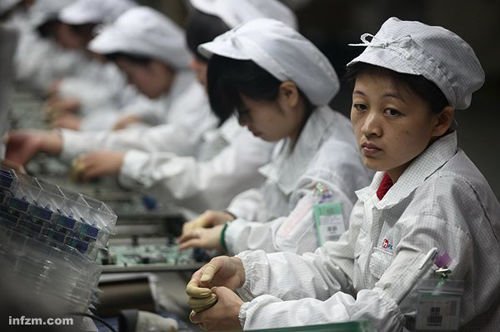 One of the biggest stories of the past week I’ve covered in the Asia technology space was the latest report from China Labor Watch into alleged rights abuses at Apple supplier Pegatron.
In terms of the abuses uncovered by the rights group, they’re pretty similar to those detailed at Foxconn over the years which led to a landmark agreement between Apple, the Fair Labor Association and the Taiwanese manufacturer to sort out conditions at its plants.
When I say “similar” I mean things like overworking and underpaying staff, breaking local employment laws through discriminatory hiring, excessive overtime and the like and subjecting employees to sub-standard living conditions.
You can usually gauge the seriousness of the allegations by the speed of the tech giant in question’s response and the length of its statement. So it was that Apple came back within a few hours with a long response claiming it had undertaken 15 audits at Pegatron and that it had been “in close contact” with CLW investigating findings highlighted by the group.
It added:
Their latest report contains claims that are new to us and we will investigate them immediately. Our audit teams will return to Pegatron, RiTeng and AVY for special inspections this week. If our audits find that workers have been underpaid or denied compensation for any time they’ve worked, we will require that Pegatron reimburse them in full.
One para that was lopped off my story referred to the fact that Pegatron facilities, including the ones mentioned in the report, produce gear for a raft of big name technology brands besides Apple. Microsoft, Dell, HP, Nokia and Asus have all had kit made by the Taiwanese headquartered manufacturer in the past.
Beyond Pegatron too there have reports of various rights abuses, in Samsung suppliers, and Chinese manufacturers making kit for firms including Telstra, Sony and Phillips.
However, the fruity-themed Cupertino giant, unfortunately for it, now has a reputation which makes it easier for hacks like me and rights groups like CLW to build a compelling narrative around such incidents.
For better or worse that’s the way it is but hopefully with Apple taking a lead, as it is certainly appears to be trying to do, on improving labour rights among its suppliers, others will follow. We mustn’t forget Apple boss Tim Cook used to be the firm’s COO and so will be well aware just how big a task it is to clean up the supply chain.
This is a process which will take years, not months, but it’s reassuring to an extent that stories like this still make the headlines, because once they stop then the whole process of improving the rights of shop workers in countries like China is likely to grind to a halt too.
Baidu’s $2 BILLION gamble on mobile apps
Posted: July 17, 2013 Filed under: Uncategorized | Tags: 91 wireless, alibaba, app store, autonavi, baidu, china, M&A, mobile app store, mobile apps, mobile internet, tencent, web, wechat Leave a commentChinese search giant Baidu has just agreed to pay $1.9 billion (£1.3bn) to acquire mobile app store provider 91 Wireless Websoft in the biggest internet M&A deal ever in the People’s Republic.
Commentators have already been arguing over whether nearly $2bn for effectively two mobile app stores is a good deal for China’s biggest search company.
As with all acquisitions, only time will tell, although it’s certainly a statement of intent for the firm and one it needed to make with the likes of Alibaba and Tencent all making big mobile internet plays.
Beijing-based Forrester analyst Wang Xiaofeng said in comments sent to me that it was a smart move for Baidu to “assure its competitiveness in the age of the mobile internet”.
“Alibaba is working on its m-commerce strategy through its investment in Sina Weibo and an [offline to online] strategy through the acquisition of Autonavi; Tencent is digging out monetisation possibilities from its killer product WeChat, including eBusiness and mobile payment,” she explained.
“91 Wireless’ strength in mobile applications will be a great complement to Baidu’s current business.”
As to exactly what Baidu is buying, well the main bit of 91’s business is two app stores – 91 Assistant and HiMarket – which apparently lead the domestic market with over 10 billion downloads.
This will give Baidu a great distribution channel for its own apps, and to be honest the deal shows a good degree of self-awareness from the web giant – it knows more users in China find info on the mobile net via apps than mobile web-based search engines.
Whether it proves to be a great piece of business or a stunningly ill-judged waste of money remains to be seen but I’d lean towards the former.
Baidu certainly couldn’t sit back and let its rivals gain the initiative in the brave new world of mobile and if this acquisition doesn’t work out it could well be because it left it too late before pouncing.
Intel and Malaysia: 41 years, $4 billion
Posted: July 12, 2013 Filed under: Uncategorized | Tags: china, chip design, CREST, designed in asia, intel, malaysia, microprocessors, MIDA, offshoring, penang, R&D, semiconductors, southeast asia, vietnam Leave a comment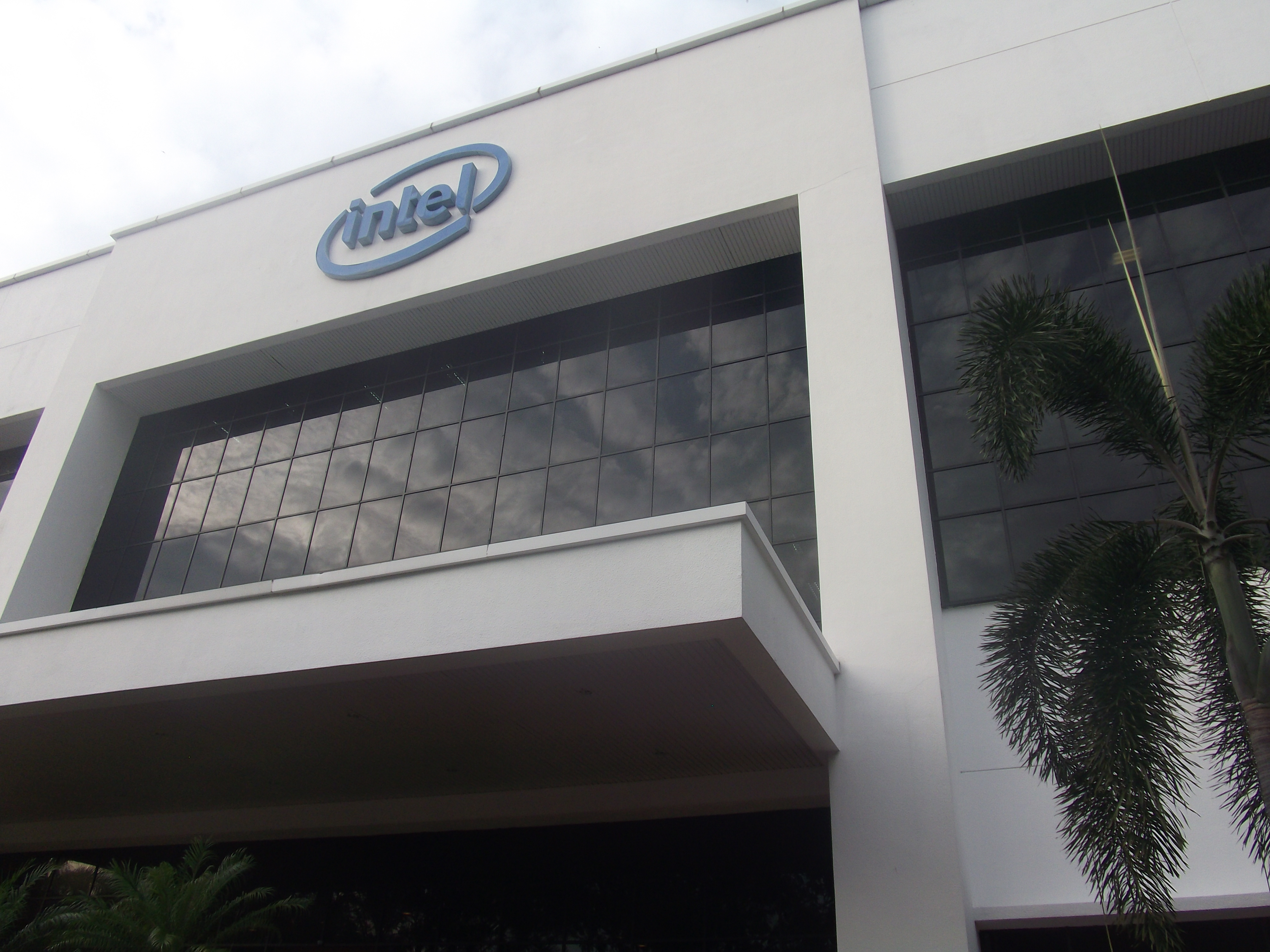 Spent a fascinating day at Intel’s Penang facility a week ago today with The Register. Up until now it’s been something of a hidden gem for Chipzilla but, as the largest plant outside of the US, it’s a key part of its Asia and global operations.
So exactly why is it such a big deal for Intel? Well it was its first ever foray outside the US some 40-odd years ago and now employs over 6,000 designers and engineers. Crucially it acts as a hub for Intel’s other plants across Asia, providing training and support for engineers from newer facilities in Chengdu, Bangalore and most recently Vietnam.
As if any more proof were needed of its importance to Intel, the firm’s global VP of the Technology and Manufacturing Group, Robin Martin, is based there.
We learned that having everything from product development and design to testing and manufacturing on one site means the firm can respond much quicker to changing market demands and keep up with faster development cycles demanded by today’s mobile computing trends.
Perhaps an even more interesting story, though, is the emergence of Malaysia and Penang as an IT destination during the past 40 years. I spoke to Datuk Noharuddin Nordin, CEO of MIDA, the government’s investment and development agency, who admitted that the reason Intel was lured to the country in the early ‘70s was purely based on cost.
However, the government has taken that early investment and managed to grow it, attracting more big electronics MNCs with skilled labour, solid IPR protection and cheap land.
“We must remember MNCs come here because they want the greatest margins,” he said. “We have to anticipate what’s round the corner and create systems which will help to prepare for that.”
It’s not done a bad job. Intel on its own has invested $4bn in Malaysia over the past 40 years and other big names including Motorola, AMD, Western Digital, Renesas, Bosch and many more have all joined Chipzilla in Penang. Nordin claimed such investment has managed to help to move local firms up the value chain, nurture world class IT talent in Malaysia’s universities and attract MNCs from other related industries like aerospace, medical equipment and automotive.
As we walked through the old colonial streets of Georgetown that evening I couldn’t help but think Penang has come a long way since its days as a British East India Company trading port.
Whether it can continue to lead in the future remains to be seen, with hugely ambitious Asian rivals like China coming up fast. However, alongside Taiwan, Malaysia has something of a first mover advantage in Southeast Asia which will be hard to match in the near-term.
Don’t worry Cisco, you’re not getting kicked out of China
Posted: July 4, 2013 Filed under: Uncategorized | Tags: android, apple, beijing, china, cisco, communist party, edward snowden, global times, microsoft, network infrastructure, nsa, operating systems, PRISM, surveillance Leave a comment A lot of media reports have been flying around this past week or two predicting that US tech firms will find life increasingly difficult for them in China following the various revelations leaked by Edward Snowden.
It’s a compelling narrative and on one level makes quite a bit of sense.
If, as the PRISM whistle-blower has claimed, the NSA really is spying on foreign targets including China and Hong Kong and even allies like the EU, then the logical next step would be to assume it could be doing so with the acquiescence of US technology providers who have managed to establish a firm foothold in the country.
After all, wasn’t it US lawmakers who branded Huawei and ZTE a national security threat due to the perceived risk of the firms being forced by Beijing to modify systems to enable state-sponsored eavesdropping?
No wonder then that Chinese state-run media including the English language Global Times have called for US companies including Cisco to be replaced by domestic providers. China Daily even sourced an anonymous “industry insider” who claimed: “There is a terrible security threat in China from US-based technology companies including Cisco, Apple and Microsoft.”
There’s good reason to believe that Cisco et al won’t be overly concerned about such claims, however.
For one thing, although its kit is all over China’s network infrastructure, the market there accounts for less than 5 per cent of turnover.
Huawei is probably Cisco’s biggest Chinese competitor, especially in the telco edge router market, and has certainly been taking market share from the venerable US giant, but a rip-and-replace policy of the sort advocated in the Chinese media is simply not practical.
“I would say a few vendor replacements had considerations beyond the offerings themselves, for example for certain clients with high security sensitivity,” Gartner analyst Tina Tian told me. “But much more of it would be purely a market decision.”
As for the other US technology providers, the likes of Google Android, Microsoft and Apple between them control just about the entire mobile and desktop operating system market in China.
For that reason and the lack of strong domestic alternatives (for the time being) we’re just not going to see wholesale changes here, which could even work in Cisco’s favour, according to Tian.
“Even if China could replace all the networking equipment from foreign vendors, their data would still need to be handled by IBM, Oracle, HP, EMC, Intel and also Microsoft,” she said.
Sweaty palms as Myanmar stalls telco license decision
Posted: June 27, 2013 Filed under: Uncategorized | Tags: burma, china mobile, human rights, human rights watch, IHRB, internet freedom, junta, myanmar, nsa, PRISM, singtel, telco, telecoms infrastructure, telecoms license, telenor, vodafone Leave a comment Over on The Register I’ve been following quite closely the carve up of Myamar (Burma) by international technology giants.
This deceptively massive country bordering China, Thailand, India and Laos, has of course only recently opened its doors to the global community after decades of self-imposed exile thanks to rule by a military junta.
So Myanmar not only offers tech firms a market of 60 million+ users to tap, but also offers rich business opportunities for infrastructure providers and could even serve as an outsourcing destination in the years to come.
An IDC report from last year, Myanmar ICT Market 2012–2016 Forecast and Analysis, predicts 15 per cent year-on-year growth in IT spending in 2012, with the market to reach $268.45m (£172.9m) by 2016.
One of the biggest opportunities lies in the telecoms space where global operators have been eyeing up the two licenses set to be awarded this month. However, the decision – due to take place today – was postponed at the last minute until lawmakers pass a new telecommunications law, still be being drafted.
It emerged that an emergency statement was submitted by a telecoms committee urging lawmakers to favour local joint ventures over global bids.
Whether this ends up scuppering the ambitions of France Telecom, Qatar Telecom, Singtel, Telenor and others remains to be seen, but it must be said that some operators are walking a fine line in getting stuck into the country before human rights concerns have been fully allayed.
Human Rights Watch, for example, has been lobbying telcos to boycott the country until legislation is passed which does better to outlaw things like mass surveillance and hardline censorship.
In fact, Vodafone and China Mobile withdrew their joint bid last month, in what some think was a decision influenced by Myanmar’s current failure to protect online freedoms.
John Morrison executive director of the Institute for Human Rights and Business (IHRB), told me that if nothing else, the recent NSA debacle has shown that even in western democracies, telcos are vulnerable to mass surveillance requests from governments.
“Given Myanmar’s human rights record it is all the more important that the companies that secure the license to operate in the country do so in a way that respects privacy and free expression,” he added.
“As Myanmar continues political and economic reforms, it should work towards making telecommunications technology a tool for advancing human rights, including guarding against hate speech that incites violence.”
Time will tell whether Myanmar can make a stable transition from repressive hermit state to 21st century Asian tiger, but if it does, technology will be a major driving force.
EU’s $30 billion data security block on India’s BPO giants
Posted: June 19, 2013 Filed under: Uncategorized | Tags: BPO, central monitoring system, cyber security, data security, dsci, DSS, EU, europe, forrester, HIPAA, india, information security, Infosys, Mahindra, Nasscom, nsa, outsourcing, PCI, SOX, trade agreement, unisys Leave a comment I don’t often cover India’s outsourcing market but an interesting piece of news emerged this week when local media reported that the EU has found some notable gaps in the country’s data protection legislation which could scupper a major trade agreement between the two.
Basically the two have been trying to thrash out the Broad-based Trade and Investment Agreement since 2006.
The idea is that India opens up more of its vast market for EU firms and vice versa, but with one of India’s biggest industries in Business Process Outsourcing, a key demand from that side was that the country be recognised as a “data secure destination” by Europe.
According to the Data Security Council of India (DSCI), this single accreditation could propel outsourcing revenues from European customers from $20bn to $50bn in no time at all.
Sadly for India, the EU Justice Department decided to launch a consultation on India’s data security credentials and now the mutterings are it doesn’t like what it sees.
Any further delays which require legislative amendments could take years – not exactly what IT services giants like Infosys, Mahindra and Unisys want.
However, Forrester security analyst Manatosh Das told me all may not be quite as bad as it seems.
For starters, he said, India is taking information security a lot more seriously nowadays since recent high profile cyber attacks.
With the proposed electronic surveillance Central Monitoring System, the country is apparently planning for stringent privacy laws, while the DSCI, set up by Nasscom, has a strict remit to monitor data security and privacy in the IT and BPO industries, he said.
“I really don’t think in the current scenario outsourcing will take a back seat,” Das added.
“Private organisations in India follow international security frameworks like ISO 27001, PCI DSS, SOX, HIPAA. They have strong contractual agreements with their clients. Clients have the right to audit the vendors as per the agreement.”
However, he did admit that the IT Amendment Act 2008 lacks enforcement and needs amending again to “remove ambiguity” and create specific exceptions.
As a side note, I’m sure the recent “landmark” agreement between the UK and India on data security will also help reassure European customers considering offloading some services to Indian firms.
As always though, rigorous planning and due diligence and early involvement from the IT department should be a given to prevent any unexpected outsourcing problems down the line.
 phil muncaster