
What’s the Real Value of Smart City Projects?
Posted: November 26, 2015 Filed under: Uncategorized | Tags: apac, asia, china, IDA, IDC, idg connect, infocomm development authority, singapore, smart city Leave a comment IDC recently released the results of a competition it ran to find the best smart city projects in Asia. As alluded to in my IDG Connect piece, I was keen to find out if these competitions, and the projects they seek to promote, are really very helpful at all.
My suspicion is that we can’t really use these competitions to judge whether one country is more “innovative” than another when it comes to IT. And I also have a feeling that in many cases, the smart city banner itself is little more than a handy, headline-grabbing way for self-aggrandising local and national politicians to attract foreign investment and talent, score geopolitical points and bolster their reputation as ‘visionary innovators’. It’s also pretty clear that Asia is far from leading the world when it comes to smart cities, despite pockets of excellence like Singapore.
IDC program manager for government insights, Gerald Wang, admitted that the picture was mixed across the region, and that the lack of legacy technology alone has not been enough to propel developing Asian countries forward.
“While it is true many cities in developing nations and emerging economies have been able to leapfrog the digital divide to what IDC coins the ‘3rd Platform’ landscape, they also lack the long-term experiences required in managing enterprise-wide ICT solutions,” he explained by email.
“This means these cities have to tread very carefully with their investments into new (sometimes untested) territories without the proper governance processes and manpower talents in fund-seeking, information management, standardisation and consolidation expertise, and building resilient environments that that withstand cyber attacks, etc.”
Leading by example
Singapore is an exception of course, in Asia and the world. Its size, relative wealth and tech savvy administration have helped produce the Smart Nation initiative, launched last year. Infocomm Development Authority executive deputy chairman, Steve Leonard, told me the goal was to improve the quality of life and opportunities of Singaporeans, especially given the rapidly ageing populous.
But he was also quite open about the initiative’s role as a tool for attracting foreign investment.
“Singapore has the unique assets that makes it easier for tech start-ups and talent to build and grow their business from here to serve other markets. Working on big enough shared global challenges that make an impact to people’s lives will inspire more entrepreneurs and talent to come to Singapore to test their ideas, and more big corporates to set up their innovation labs or ventures here,” he argued.
“It starts a virtuous cycle – talent attracts more talent, more ideas and start-ups are established, the excitement builds on itself and we get more breakthroughs. Investment capital naturally gravitates to where there’s a high concentration of great talent and business opportunities.”
So smart cities in Asia could actually be good news for western tech investors, from start-ups through to large corporates. But what about the other way round? Are local leaders also signing off projects with a view to exporting technology and/or services one day? Not quite, according to Leonard.
“Our goal is for Singapore to be a node on the global network. Different countries are doing different things and we can all learn from each other’s experience,” he said. “The challenges we are working on in Singapore are not unique to us, other countries face similar challenges. We believe if you can make it work in Singapore, you can have the opportunity to adapt and apply to other contexts.”
Nice idea. But I’ve got a feeling that more countries will be learning from Singapore than the other way round over the next decade.
Huawei Top Dog in Chinese Smartphone Market – So What Now?
Posted: October 28, 2015 Filed under: Uncategorized | Tags: canalys, china, Chinese new year, huawei, smartphone sales, smartphones, xiaomi Leave a comment Huawei has leaped over local rival Xiaomi to take number one spot in China’s much prized smartphone market, according to Canalys. I covered the news for IDG Connect and asked Canalys VP analysis, Rachel Lashford, whether she thought the Middle Kingdom now belonged to domestic players.
She argued that the market has actually decelerated slightly of late (1% from 1H14 to 1H15) which has increased the pressure on all vendors – but Apple and Samsung are still flying the flag for the Rest of the World.
“Apple still has a very powerful brand in China and we expect to see the latest product launches to continue its popularity,” Lashford told me.
Samsung, meanwhile, has dropped from the top spot of a 15% share in 1H14 to fourth place (9%) a year later.
“But it is recovering in the high end and has really focused on investing in localised marketing messages,” Lashford added, by email. “Combined with recent restructuring of its channels, focusing on large retail and operators, it should be well equipped to keep the pressure up on its local competition.”
So what of Huawei and Xiaomi? The former’s rise has come on the back off a steady building out of online channels over the past two years and a focus on its offline channel presence. Aiming squarely at the mid-range ($200-500), it has increased investment in the brand to good effect, concentrated on quality and kept momentum with regular product updates.
Xiaomi, on the other hand, may have taken its eye off the ball by concentrating on wearables, TVs and other smart home kit. It will need a “refreshed flagship” in time for Chinese New Year to wrest back momentum, she claimed.
And what of the two vendors’ plans for international expansion? Well, half of Huawei’s sales already come from outside the massive China market. But Xiaomi will need more help to get it competing beyond the Great Firewall.
“Many vendors are hindered by the lack of patents and having the difficulties and expense of licensing those in order to enter markets like the US and Western Europe where these are adhered to, so this needs to be overcome,” claimed Lashford.
“As does the adoption of a successful channel strategy. Xioami’s focus has been directly online, but it will still likely need the expertise of distributors mobility businesses – like Tech Data and Ingram Micro – in order to navigate the complexities of bringing those products to market.”
Japan’s Cybercrime Underground: a Ticking Time Bomb?
Posted: October 16, 2015 Filed under: Uncategorized | Tags: china, cybercrime, demon killer, fireeye, japan, Japan cybercrime, national police agency, trend micro, yakuza Leave a comment China, Russia, Eastern Europe, the Middle East – the list of hacking hotspots on the radar of most threat intelligence operatives is growing all the time. But what about Japan? For such an apparently technologically advanced nation, you might be surprised to learn its cybercrime underground is still in its infancy.
That’s the key takeaway from a new Trend Micro report I covered for Infosecurity and IDG Connect recently.
The security giant claimed that Japanese cybercriminals haven’t yet built up the technical know-how to create malware themselves, preferring to buy from other countries and then share tips on how to use it on many of the local underground bulletin board forums.
These forums also sell the usual suspects of child porn, stolen card data, stolen phone numbers, weapons, and so on.
There were several interesting distinctions Trend Micro uncovered between the Japanese cybercrime underground and elsewhere:
- Cybercriminals accept gift cards from Amazon and the like in lieu of payment
- CAPTCHA in Japanese is used to access the forums, keeping their membership mainly to locals
- URLs for some secret BBSs hosted on Tor and other anonymising platforms can actually be found published in books and magazines
- Japanese cybercriminals are ultra cautious, even using code words when discussing certain contraband, like the kanji character for “cold” when referring to methamphetamine.
So far, the notorious yakuza organised crime gangs have largely stayed out of the game, and that’s the way it’ll stay for some time to come, report author Akira Urano told me. That’s because of a combination of strict cybersecurity laws and the fact that offline scams still work a treat. But it might not be that way forever.
“If ever organized crime groups like the yakuza ever venture into darknets, all they would need is the aid of tech-savvy individuals to engage in criminal transactions,” Urano argues in the report.
I was curious to hear a second opinion on Japanese cybercrime, so I asked FireEye’s local experts.
They hit me with a few stats from the National Police Agency (NPA) which show that, infancy or not, there’s a pretty healthy cybercrime industry in Japan.
Some 88 people were arrested for cybercrimes in the first half of the year, 58% of whom were Japanese. The country is also a major victim of banking fraud – second only to the US, according to other stats.
The country’s public and private sectors also have to withstand a barrage of likely state-backed cyber attacks, launched from outside the country.
Japan’s strengths in advanced technology and engineering, as well as its hand in territorial disputes, have made it a target for China.
Aerospace and defence, transportation, high-tech, construction and telecoms are some of the highest risk industries.
FireEye told me the following by email.
“FireEye observes similar tactics and techniques on Japanese networks as we see elsewhere in the world. However, the key difference is localization: APT actors tailor their phishing e-mails, CnC infrastructure, and even their exploits to Japanese end users. For instance, we have observed threat activity against Japanese targets exploit the Japanese Ichitaro word processing system; zero days against the program are not uncommon.”
The Annual Cost of China’s Economic Cyber Espionage: $5 Trillion
Posted: September 15, 2015 Filed under: Uncategorized | Tags: china, communist party china, counterfeit, Epoch Times, IP theft, piracy, PLA, SoE, tech transfer, unit 61395 Leave a comment How much do you think Chinese state-sponsored cyber spies steal from the US each year? No, you’re way off. It’s in the region of $5 trillion – 30% of GDP – according to one expert interviewed in a new exposé of Beijing-backed cyber attacks by the Epoch Times.
I covered this one for Infosecurity and IDG Connect because although most of the info for the article came from publicly available sources, it had some interesting insight from various industry experts and tied together the whole shadowy web of guanxi-tinged goings-on in the Middle Kingdom very well.
Particularly illuminating were claims that there are hundreds of state-backed “tech transfer centres” whose mission is to earmark IP they want, send scientists abroad to study in relevant industries and then reverse engineer products from stolen IP. It’s China investing in state-sanctioned theft because it’s quicker, easier and way cheaper than doing R&D the legal way. It’s happening on an industrial scale, to feed the country’s military aspirations and economic growth – many of the products are produced cheaply and sold back to the West at a fraction of the cost of the originals.
It’s thoroughly depressing but fascinating stuff and will make for frustrating reading if you’re a US tech CEO. If you haven’t been breached yet, you will be – or maybe you just haven’t found out about it yet.
China can do this, of course, because there’s a very fine line between government, academia, military, state-owned enterprise and even private business. All organisations must have a CCP committee which some believe sits even higher than the board. And all are expected to pull together for the betterment of Team China. But while the report calls out state-owned enterprises, there is in fact little in the way of evidence that private businesses have capitalised on stolen IP to accelerate R&D and produce cheap kit with which to flood Western markets.
Report author Josh Philipp told me that evidence was hard to find – even the US indictment of five PLA hackers last year referenced only SoEs. IP theft does happen, however, especially by contract manufacturers making products for US firms, although this is slightly different from the cyber espionage/tech transfer cycle mentioned in the report.
“Any private company involved would likely be running a small-scale counterfeit operation, which would be hard to pin down,” Philipp told me.
What is clear is that despite recent exhortations from the top to create an “innovation driven” country – an admission in itself that hitherto China’s economic growth and military might has been built on theft – the Chinese communist regime is unlikely to change things around anytime soon.
Western firms must get better at deflecting these attacks – and in so doing force up the size of investment needed by Beijing into cyber espionage activity, so that attack campaigns are just not worth the return in many cases. If they don’t, we can expect the same old breach headlines to continue ad infinitum.
Can Bitcoin Go Mainstream?
Posted: June 17, 2015 Filed under: Uncategorized | Tags: bitcoin, china, crypto currency, digital currency, hong kong, IT Pro, regulation Leave a comment What’s the future of Bitcoin? That’s what I’ve been trying to work out in my latest feature for IT Pro in Hong Kong. As always it’s a topic everyone seems to have an opinion on, although not many are prepared to stick their neck out too far.
The main issue is that most countries have adopted a “wait and see” approach to the crypto-currency, which puts it a bit in limbo. Very few have banned it outright – not even China or Thailand, as is commonly reported.
Usually in these cases, it’s merely restrictions rather than total prohibition that have been instituted.
For Frost & Sullivan analyst, Vijay Narayanan, IT leaders in public and private sector organisations could face “new challenges, responsibilities and opportunities” if the cryto-currency can establish itself.
“While corporates are likely to build upon the Bitcoin technology to deliver new products and services, governments may find new methodologies to execute its mission from a view point of a law enforcer and regulator,” he told me.
“Bitcoin, in the future, further could revolutionise the way firms conduct business. As Bitcoin as a form of payment is expected to mature, it is likely to create an ecosystem of firms that will support retailers and end consumers in storing, accepting and exchanging bitcoins as a mode of barter of goods and services.”
However, he argued that for Bitcoin to go mainstream if must become more stable, and “resolve issues pertaining to trust and security” – only this will give the markets the confidence they need to adopt it more readily.
Quocirca founder Clive Longbottom agreed that the currency’s price volatility has been its undoing in the past, claiming that only those who value anonymity are really keeping it going from an end user perspective.
“Most governments are publicly trying to say that Bitcoin is a passing fad that will not last, while shitting themselves behind closed doors as to what crypto-currencies mean to global trade and how that can be effectively tracked, taxed and manipulated. It is more than likely that there have been deep discussions between governments and central and global banks to try and find a way to control any spread of crypto-currencies, but obviously, without a completely different thought process behind it all, these will not get anywhere,” he told me by email.
“It is difficult to regulate something where there is no true controlling body as such and all transactions are controlled by an overarching network. It is too easy for people to bypass any controls, so transactional charges and banking charges cannot be easily applied. As such, I think that we will see a few poorly thought out and implemented attempts to put in place some level of control, which will fail – unless Bitcoin itself suffers more problems.”
As to the future – well I suspect that Bitcoin and digital currencies in general will fail in themselves to see the mass adoption predicted for so long, mainly because most people are perfectly happy with existing currency systems. Where it could become more popular is in countries which already have weak and volatile currencies, but I doubt this will give it the momentum it needs.
Whether something bigger and better – and easier for ordinary users to ‘grasp’ – will eventually evolve from these platforms, is the great imponderable.
Will Apple’s China pivot come back to haunt it?
Posted: May 1, 2015 Filed under: Uncategorized | Tags: android, apple, apple watch, apple watch china, backdoors, censorship, china, cyber security, financials, IDC, idg connect, iphone 6, nsa, snowden, tim cook Leave a commentApple had a rip-roaring second quarter, as I’ve just reported here for IDG Connect. But the financials were about more than putting yet more dollars in the bank. In years to come, the quarter may well be seen as a tipping point – the point when the Cupertino giant came to rely way too much on China.
Although sales in China have yet to surpass the Americas, that point is not too far away. But the quarter did see iPhone sales from the Middle Kingdom overtake the US, and it also witnessed total revenue from China leapfrog that of Europe – two pretty significant milestones.
Apple is in a position that its American rivals and counterparts – Google, Microsoft, Amazon, Facebook etc – would dearly love. They’ve all been either banned or investigated for anti-trust dealings – in other words harangued by the authorities. These firms face an uncertain future in the world’s soon-to-be largest technology market. But while Apple is largely loved by consumers still in style-obsessed China, its days too could be numbered.
Certainly the government has been making life difficult for US tech firms over the past year or two. The revelations from NSA whistleblower Edward Snowden has given it the perfect excuse to request stringent security checks on products destined for the public sector market. It’s a de facto ban for many providers. Beijing is trying to do the same with the banking industry. And it will get its way, eventually.
Kowtow time
What does it mean for Apple? Yes the firm is a large investor in the country. But that won’t count for much if or when Beijing wants to apply some pressure. Apple has already been forced to comply with its unpalatable censorship demands, withdrawing apps from its store. It was notably silent when the authorities launched a Man in the Middle attack on iCloud last year. And CEO Tim Cook was forced to make a grovelling apology when a state TV-led witch hunt found issues with its customer service in the country. Cook has reportedly also agreed to give the government access to its source code in a bid to pacify regulators and ensure its devices are approved. This in itself could backfire if Beijing uses that intelligence to create backdoors to spy on Apple users outside the country.
Then there’s the issue of growth. China is not necessarily the license to print money many think it is for Apple.
IDC analyst Xiaohan Tay told me smartphone growth will begin to slow in the country over the coming years.
“Most of the growth in the smartphone market will come from the lower end segment of the market. As Apple is a high-end product in the China market, most of its growth will come from replacement users which are the Apple fans, as well as those who may be using the higher end Android phones at the moment,” she added.
“The new iPhones were a hit in the Chinese market as consumers were awaiting the release of the larger screen sized phones from Apple for the longest time, and this helped to drive growth in the past two quarters since the new iPhones were launched in China.”
Growth will continue, but at a slower rate, although the Apple Watch represents a great opportunity to arrest that slide, she added.
“The die-hard Apple fans as well as the middle and upper-middle class consumers in the cities will help to sustain the growth,” said Tay. “I believe that Apple’s high prices actually makes its phones more desirable for the consumers. Owning an iPhone represents a status symbol that the average consumer wants to work towards.”
Plenty of positives for the future for Apple in China, then. But what the Middle Kingdom giveth it can also taketh away. In my opinion, Cupertino had better disperse its eggs into other BRIC baskets if it wants to avoid a nasty surprise down the road.
The Future of Google (Spoiler: It’s Pretty Bright)
Posted: March 27, 2015 Filed under: Uncategorized | Tags: ad revenue, android, china, cloud computing, google, IoT, IT Pro Hong Kong, Ovum, public cloud, Quocirca, smartphones, strategy, wearables, youtube Leave a comment I’ve just finished a piece on Google’s uncertain future. Bit odd, you might think, given it’s one of the world’s biggest and most profitable companies.
Well, the initial brief was based on the web giant missing analyst expectations for Q4 2014. Which it didn’t do by a long way, but there you go. Although it has since bounced back with a storming start to 2015, there’s still enough latitude to ask where the firm might be headed over the next decade. Where are its core strengths, and how it will cope with the slow down in ad spend, increasing competition from the likes of Facebook and the move of more ad dollars into mobile, etc etc.
Google is in a lot of ways a company of two parts: the shiny, innovative, envelope-pushing start up putting huge amounts of cash into cutting edge technology projects that could transform the world in years to come; and the cash-hungry advertising behemoth. The problem it has is that the former relies on revenue from the latter to continue, although this is declining. The key I think will be Google’s ability to pull in more revenue from new streams going forward.
One of these will be video.
“I think for Google YouTube will remain a key strategic play and over the long term a strong source of revenues. YouTube combines two major digital advertising channels into a single location – search and video,” Ovum analyst James McDavid told me.
“Ovum’s forecast data shows that search is still the single largest segment of digital advertising spending but video is the fastest growing. Google having market leading plays in both sectors bodes pretty well for their future.”
Another key area is likely to be mobile, and Android is well placed with a market leading share. Google has a great opportunity to increase sales of services, ads, licenses and devices as well as peeling off a healthy cut of app sales. Only the huge market of China, where Play is locked out, and the potential fragmentation of the OS, threaten it here.
Quocirca founder Clive Longbottom agreed that Android represents Google’s best opportunity platform wise going forward.
“Chromebooks have been a bit of a disaster: a hell of a lot of work is required to make Chrome into an OS that works effectively and brings all the other Google services together in a way that really works,” he told me.
“Android, however, has been a runaway success – it is probably better for Google to concentrate on Android as the OS with a Chrome layer on top in a looser way than it has tried to date.”
I’ve only just had time to scratch the surface here; there’s also a great opportunity in cloud services, IoT and wearables and more for Google. It’ll just be interesting to see how it gets there – and whether any others can realistically challenge the Mountain View giant over such a wide sweep of product and service areas in the future.
Beware the ‘Glocals’ if you’re Planning a Career in Asian IT
Posted: January 30, 2015 Filed under: Uncategorized | Tags: china, harvey nash, hong kong jobs, idg connect, IT jobs, IT jobs asia, office stress, recruitment, regus Leave a comment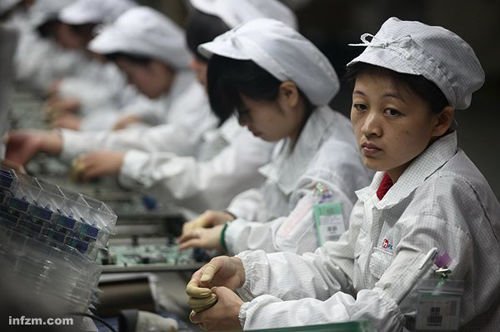 I’ve just finished a piece for IDG Connect looking ahead to job prospects in Hong Kong and China for ex-pat IT pros in 2015. As usual, it’s a mixed bag.
On the one hand the jobs market is booming and there are plenty of vacancies. The Harvey Nash CIO Survey of 2014, for example found 76% of Hong Kong and China CIOs were concerned about a technology skills shortage. A further 42% said they were planning to increase headcount last year and APAC MD Nick Marsh told me by email that he “expects to see that demand continue” this year.
Skills particularly in demand, he said, are big data, mobile, cloud and digital, although more traditional areas are also important. “Fundamental areas such as project management, enterprise architecture, and business analysis are still the top areas of skill demand,” he said.
Candidates with leadership capabilities and “exceptional communication skills” as well as those who can demonstrate an ability to innovate will be favoured.
However, Marsh also warned that employers in the region are increasingly likely to favour “glocals” – that is, locals who have overseas education and/or experience.
This is bad news for the ex-pat IT job seeker looking to land a plum job in China or Hong Kong.
“Candidates should focus on the strength of their understanding of the local market, customers, and their industry,” Marsh advised. “This understanding is critical, and without it they are likely to lose out to local or ‘glocal’ talent.”
More bad news came in the form of a recent Regus study on office stress in Hong Kong and China.
It found that in Hong Kong, working to deadlines (24%) was rated stressful by a far higher percentage than the global average (14%), while “colleagues” (11%) was more than double the global norm of 5%.
Unreliable or obsolete technology (26%) and a lack of staff (28%) were also major factors.
“When employees don’t have a good work/life balance, they feel overstretched, unhappy and, ultimately they become less productive,” Regus Hong Kong country manager Michael Ormiston told me. “Flexible working can alleviate some of the pressures that create stress, while at the same time reducing a company’s costs.”
Given that most employers in China and Hong Kong are putting ex-pats on local packages these days, a move out East is becoming less and less attractive to Western IT professionals. It might be worth staying put for the time being.
Censor much? What to expect from the Great Firewall in 2015
Posted: November 21, 2014 Filed under: Uncategorized | Tags: akamai, beijing, censorship, china, communist party, edgecast, google, great firewall, greatfire.org, hsbc, hsbc outage china, https, icloud, infosecurity magazine, man in the middle Leave a commentI’ve been speaking to anti-censorship organisation Greafire.org about online freedoms in China and what we’re likely to see in 2015. It makes for pretty depressing reading.
First of all, the app market will see an ever-tightening regulatory regime following new regulations passed in October, according to co-founder Percy Alpha.
“I fear that in the future, apps will be like websites, i.e you have to get a license before publishing any,” he told me by email.
Then there’s the current trend for Man in the Middle attacks as a way to monitor and block access to various online services and sites.
The Great Firewall has already tried this tactic on Google, Yahoo and iCloud to name but three. It’s the only way the authorities can see what people are up to once a site switches to HTTPS.
The smart money is apparently on more of these attacks in 2015, but increasingly focused on smaller sites so as to not arouse much media attention.
The Chinese authorities have also been going after Greatfire itself of late, proof the anti-censorship group must be doing something right.
Their mirrored sites, which allow users behind the Great Firewall view blocked content, have been a minor irritant to the authorities until now. But since last week Beijing upped the ante in two astonishing moves against the content delivery networks (CDNs) Greatfire uses.
The first resulted in EdgeCast losing all service in China – which could mean tens of thousands of sites affected. Then another swipe took out an Akamai subdomain also used by HSBC. The result? Its corporate banking services became unavailable. It just shows the lengths the Party is prepared to go to control the flow of information.
The last word goes to co-founder Charlie Smith:
“I think we will continue to see the kinds of crackdown we have seen this past year. I think that for a long time, many optimists have said, give the authorities some time, restrictions will loosen up and information will flow more freely. If anything, the exact opposite is happening – I’m not sure why people seem to make comments otherwise.
If anything, I think the authorities will take censorship too far in 2015. They will push the Chinese over the limit of what they are willing to tolerate.”
China’s state-backed hacking plans for 2015
Posted: November 7, 2014 Filed under: Uncategorized | Tags: APTs, china, cyber espionage, fireeye, hacking, idg connect, state-sponsored cyber attacks, targeted attacks Leave a commentI’ve just been putting together a piece for IDG Connect on tech predictions for China and Hong Kong in 2015. It’s always difficult to fit in all the comment I manage to get on these pieces, so here’s a bit more on the cyber security side of things, from FireEye threat intelligence manager Jen Weedon.
The long and the short of it is “expect more of the same” from China. The US strategy of naming and shaming PLA operatives ain’t really doing much at all.
“In the next six to twelve months, targeted data theft by China-based actors is likely to remain consistent with patterns we have observed in the past,” Weedon told me by email.
“We expect Chinese threat groups to conduct espionage campaigns that are in line with the Chinese central government’s political and development goals.”
So what exactly will these goals be in 2015? Well, according to Weedon we can expect data theft to focus on climate change and the tech sector.
“China’s ongoing pollution challenges provide strong incentive for threat actors to steal data related to technologies that can help China stem the environmental impact of its heavy reliance on coal,” she said. “We also expect cyber espionage activity against governments and policy influencers in the run-up to the 2015 UN Climate Summit as China seeks intelligence to enhance its negotiating position on global climate policy issues.”
As for the tech sector, China is stepping up its efforts to develop homegrown computing and semiconductor policies – ostensibly for reasons of national security, ie to close down the risk of NSA backdoors in US kit.
“As the country pursues these goals, we anticipate Chinese actors will leverage data theft to supplement knowledge acquired through legitimate channels such as joint ventures with experience foreign partners,” Weedon told me.
“We regularly observe China-based threat actors target firms engaged in joint ventures with Chinese enterprises.”
Territorial disputes in the South and East China Seas will also continue to drive cyber espionage activity, she said.
As for beyond that, we’ll just have to wait until after the National Development and Reform Commission (NDRC) outlines development priorities for the 13th Five Year Plan.
“As the central government solidifies its goals for the 2016 to 2020 timeframe, we expect further clues to emerge about which topics are likely to enter threat groups’ cross hairs in 2015 and beyond,” said Weedon.
It’s very much a question, therefore, not of whether China will continue its blatant state-backed cyber espionage campaigns, but where it will focus its considerable resources.
 phil muncaster